
1

2
3
4
5

6
7

8

9

10
11
12
13
14
15
16
17
If you support privacy, you probably aren’t using Instagram anyway, but if you have friends and family that still use it, you want to let them know about this new invasive feature Instagram is introducing.
Meta is rolling out three new Instagram updates, but one of them takes the platform into territory that should set off serious alarm bells for anyone who values privacy.
The first two changes are relatively harmless: a new option to repost public Reels and a “Friends” tab showing posts your contacts have liked or commented on.
The third is far more invasive: Instagram’s new “Friend Map,” a live-tracking system that lets you share your exact location with chosen contacts and see theirs in return.
Meta frames it as a way to “stay up-to-date with friends,” but its real value is to the company, not to you.
The feature mirrors Snapchat’s “Snap Map” and is being introduced first in the United States before a global release. Unlike meeting up for coffee, this kind of “connection” means giving Meta a constant feed of where you are, when you are there, and how often you go.
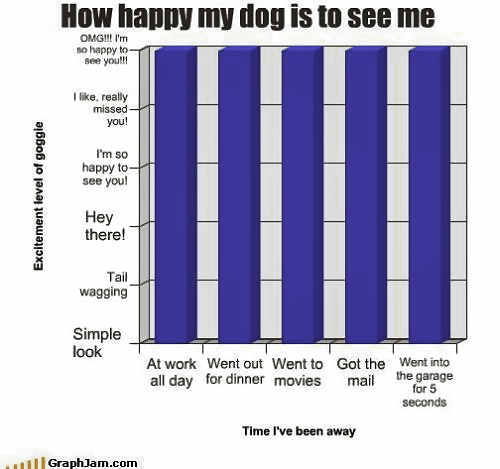
I got good response on my dog, Boxer Rebellion as well as my interview series, so I thought I’d interview her by describing her day.
Here’s how it goes…..
Wake up, Oh boy, it’s Christmas day, every day! my favorite!
Go for a walk, Oh boy! my favorite!
Eat Dog Food, Oh boy! my favorite!
Play with my toys, Oh Boy! my favorite!
Bark at the kids leaving for school, Oh boy! my favorite!
Nap, Oh boy! my favorite!
Lunch with Dad, maybe some people food, Oh boy! my favorite!
Go for a walk, Oh boy! my favorite!
Bark at the mailman, Oh boy! my favorite!
Kids come home from school, Oh boy! my favorite!
Nap, Oh boy! my favorite!
If I’m good, I get a treat, Oh boy! my favorite!
Dog food, Oh boy! my favorite!
Bark and play with my toys, Oh boy! my favorite!
Go for a walk, Oh boy! my favorite!
Time for bed, sleep on Dad, Oh boy! my favorite!


How You Would Spend Your Time
About You
“How will you make this world a better place than when you came into it?”
or similarly, in the same spirit,
“When you die, what do you want to be remembered for?”
I’ve found that, in general, a person can only answer these questions well if:
What is the first moment you remember in your Life?
What are 3 qualities that you take most pride in in yourself?
If you were to be exiled to a deserted island (presumably this island has nothing other than basic survival items) by yourself and were allowed one comfort item, what would that item be?
What is the last thing that you have seen/heard/experienced that has inspired you?
Do you have a role model right now, and why is that person your role model?
What are you most afraid of, amongst the 7 deadly fears?
– Most people don’t know what the 7 deadly fears are, so I often phrase this question as “What is worse, rejection, inadequacy, guilt, or whatever else you can think of?”
Rank the love languages for a) how you love to receive, and b) how you give.
What is the funniest thing that you’ve ever watched?
– Some people say chick flicks, some say The Office type shows, for me the Tina Fey spoof with Sarah Palin in 2008 takes the cake. You get the point.
If you go into a bookstore, what is the first section that you will go to?
What engages you intellectually?
Someone just told you “you are awesome”. What just transpired?
What drives you? If there ever come a point where you commit suicide (touch wood), presumably because you have lost all hope and drive to live, why would that be?
What would keep you up at night?
What is the most misunderstood trait/belief about you?
10 years later, you are the happiest person in the world. What could have happened in between those 10 years?
When was the last time you cried, and why?
What is your proudest moment in your life thus far?
– I get answers ranging from career accomplishments, to small things which do their family proud, to encounters with personal growth, etc.
What would be one skill that you would want to learn if you could master it in 1 hour?
As with all my bloggerviews, I try to talk to interesting people. Up until now, they were from IBM, but I ventured outside for this one as it goes back to my roots. Although we grew up in towns not very far apart in Central Florida, Gina and I met at Core International in Boca Raton, which Gina describes below. We were both young and worked together with some other talented folks who have gone on to many tech companies.
She has gone on to a fantastic career at Ziff Davis, IDG, ABC, MSNBC, CNBC, SF Chronicle, and was the youngest Female CEO of a tech company. Just last week, she released iWoz, the story of Steve Wozniak, inventor of the Apple Computer which she discusses. In one week, it shot to number 20 on Amazon and is still climbing. I recommend that you buy a copy and enjoy both the story and her talent. For more information and updates, check out her blog at http://ginasmith.typepad.com.
Gina was gracious enough to grant this interview and while we covered the questions, we caught up on life since CORE, friends and family and life’s experiences. She has always been down to earth and I’m proud to call her a friend.
Describe your life travel from a hometown girl from Ormond Beach to be a famous Good Morning America (GMA) personality, CEO, and Author?
I grew up in Ormond Beach, FL. Not far from where you grew up in Winter Park, John! I used to sit on the beach as a kid and squint, pretending the hotels were high-rises and that the sand was snow. My dream was to grow up and live in work in a major city like New York, Boston or San Francisco. I wanted out and up. And I’ve been lucky enough to live in all of those places!
How did it happen? Long story, but here’s the gist. Remember how I was working with you at CORE International as a tech writer making 14K a year? Thanks a lot for that great salary. Anyway, one day I wrote a press release and the tech journal PC Week ran almost without a change. I wrote a letter to the editor (on peacock blue paper — I was 23!) and enclosed copies of my press release and the article, saying they should hire me if they wanted a journalist who understood technology. To my total surprise they did hire me about a year later, and I covered the Microsoft beat at PC Week in Boston from 8/8/88 to 1993. (author – here is the actual story from my clipbook)

After that, I just worked non-stop. I covered hardware for PC/Computing in San Francisco, started a magazine for IDG called E2 (which in turn started the tradeshow E3), did a radio show with Leo Laporte (On Computers), wrote a column called Inside Silicon Valley for the SF Chronicle for about a dozen years, a bunch of things. Constant working! Then, one day, a producer asked me to come on a show then called Macneil Lehrer to debate Steve Ballmer about Windows 95, which was about to come out. I argued that Microsoft was not pointing out to people that their 1 MB PCs were not going to be able to run it, that they would need new apps and so on. A talent scout at ABC in New York saw it, and I ended up on Good Morning America, World News Tonight with Peter Jennings and Nightline for the next five years.
When did you know you had a talent for being in the media?
When the talent scout called me! : ) But I’ve always been a ham. And after talking tech to live callers on the radio about technology for so many years, I felt very comfortable with the subject when people like Diane Sawyer and Peter Jennings were throwing me softballs.
What were some of your experiences on GMA?
In the green room, where the celebrities wait before going on, I met such an amazing variety of people. I was able to ask the OJ Simpson trial jurors what they were thinking when they acquitted him. I met Milton Berle and told him a joke he laughed at. (Two atoms are walking down the street. One says, uh, oh, I think I lost an electron. The other says, are you sure? The first, says, I’m positive!) I was privileged to meet Harry Belafonte, whom my mother followed around for a bit as kind of a groupie in the 50s. And he remembered her! I met Bill Clinton, who was so impressive, so articulate and so much imposing and better looking in person than he was on TV. For Nightline, I had the amazing experience of working with Ted Koppel and his incredible producers. What they were doing over there was true broadcasting art. The night that show went off the air, something in journalism died.
What technology stories did you break that you felt were important?
I broke the first story on Windows 3.0 at PC Week, and also the first story about PM Lite (Presentation Manager Lite), which IBM was secretly producing to compete with Windows after Microsoft switched horses on them and started developing its apps for Windows instead of OS/2. I broke the first story about Pixar for the Chronicle. At ABC, I broke the story about those kids who committed suicide in Southern California, thinking they were going to reunite on a spaceship. I was the first to find the website they left. I broke lots of stories. It kind of became my specialty, to get THE story first.
Talk about your time as the youngest female CEO in the Tech industry.
It was tough. I was 33. Larry Ellison, whom I’d interviewed a few times, called me out of the blue and asked me to meet. When I arrived, he offered me the job as co-founder, CEO and president of his second business to build network computers (NCs). I said, “Why me?” He said of all the coverage he’d read on his network computer idea, I was the only one who seemed to understand it. He was right about that – I thought thin clients were the future and I still believe that. Anyway, he gave me a fat check and I restarted the company and renamed it NIC (New Internet Computer Company). We sold lots of computers and broke even – we never lost money – but though the idea was prescient, we were way too early. Lots of fellow journalists took potshots at me – assuming I was either a bitch or involved with Larry – but that is how it goes with women in power, I think. My husband was really hurt about it, but whatever. I used to tell people: If I were involved with (the then richest) man in the world, why would I be putting in 16 hour days? Ha! But in the end, it was the experience of a lifetime. I learned Mandarin (well, business Mandarin), traveled extensively in Asia for contract negotiations, managed a team of 70 people. And these were the brightest and nicest people you’ll ever meet. The NIC team was like no other. But when NIC went down at the dot com crash, an era was over me. That’s when I had my baby – Eric is now 3 – and I started once again doing both what I used to do and what I think I was born to do…. Write.
I finished The Genomics Age – a book that explains DNA sciences in plain English for business people – before Eric was one. That was my fourth book. My fifth is out now! It is the co-written autobiography of Steve Wozniak, iWOZ. (WW Norton 2006)
Where do you get your ideas for books?
When I am interested in something and I go to a bookstore and there are few or no books on the subject, I pitch a book. That’s how The Genomics Age happened. It is selling all over the world now.
You just completed the book iWoz. Talk about that book and Woz himself?
Steve Wozniak is unquestionably among the greatest living inventors today. He invented the personal computer, which so few people know. He was the first to combine a keyboard and screen with a computer – that’s the modern paradigm. To write the book, I met with him 54 times and interviewed him. Then, I took printed transcripts and used his words – he is a hilarious and plain-spoken guy – and wrote the book in his voice exactly. Some of his stories are just priceless. Especially the ones involving the early days with him and Steve Jobs building Blue Boxes, devices to make free phone calls. Also, the book talks about why Steve believes IBM overtook Apple with its IBM PC. Steve thinks the fault lied with the faulty Apple III, which was designed by committee.
What’s your next project?
You can see my series, Tech Tour, right now at www.techtour.msnbc.com. We are going city to city show-casing inventions. My next book is tentatively titled Five Threats to Global Civilization, but I am taking a bit of a break before starting that. I am also doing lots of work with Link TV, a satellite channel, on American Ramadan and other Arab-related issues. Most people don’t know this, but I am a major ethnic mix. My mother was half Muslim, my father was half Jewish and I was raised Catholic. So covering Islamic issues and other topics outside of science and technology is a real treat for me.

Many years ago, I brought John Dvorak back to the ThinkPad design center for an interview with David. This is a room with more creative designs than most museums. Many items never make it out of this lab, yet they would make a lesser designer famous.
I never sensed that David yearned for fame, but it follows him nevertheless because of his work. If you’ve ever touched a Lenovo or IBM Personal Computer or Server product, David has touched your life, I’m guessing many hundreds of millions here. As you’ll read below, his design reaches out to you rather than you looking at it.
I always try to bloggerview interesting people, and this is as interesting as any I’ve done. While being quiet spoken, his thoughts and creativeness speak loudly. Go to David’s Blog to be informed. That was what I did and why I asked him to be a guest here.
I was speaking with Bill Howard at PC Magazine during his laptop roundup one year. He mentioned to me that while you see Dell’s or HP’s or whatever laptop in advertisements, if you go to the businesspersons working area or any airport’s premium flyers lounge, regardless of the airline, it is a ThinkPad convention. He said they were the best designed, most rugged and the most trusted laptop, enough said.
Briefly explain what you do for Lenovo, and is it the same thing that you did for IBM?
What I do for Lenovo is lead all of the design activity for the commercial products, ThinkPad, ThinkCenter, Lenovo 3000 and ease of use. I also am in charge of the corporate identity element for the company including building design, signage, storefront, business cards and the overall identity of the company beyond the products.
The job is similar to IBM except for the corporate element which has been exciting for me. We are designing a new Lenovo building in Perimeter Park near RTP. It is a new facility and I’m leading the architectural style and appearance. I’ve been working with an external architectural firm on the interior design, landscaping and courtyard.
What is your background and qualifications?
Early in my university education I was fortunate to meet a working industrial designer who brought in portfolio of products and talked about design of everything from household products to cars.
So I studied Industrial Design at the University of Kansas.
I worked for several years at a design consulting firm in Wichita, designing everything from underground trenching equipment to wristwatches. I worked with talented and interesting people there, but I always had desire to work in an environment where I had control. At a consulting firm, you might do a sketch (for example I designed a hand held spotlight) and then never see it again until it was a product. They changed the spotlight and it negated the design concept which compromised the product. I found that to be frustrating and realized that this wouldn’t work for me.
I looked for a company with strong internal design organization and a sense of history, and found IBM in Rochester MN, Interestingly, I took the job of a classmate from college who went back to school to get a PhD. I worked there on the systems product division, then known as the System 38 and 36. I led design for the AS/400 Advanced Series, which we changed from being beige, innocuous and drab products into powerful, black, purposefully designed servers. This design became pervasive throughout the entire server series from the initial 1994 product. The beige products were too “quiet”, we made design into bigger statement for the company.
What inspires you for your designs?
Design inspiration comes from many things, It comes from your own personal experience of using products, observing someone else using a product, market research, seeing interesting products at a store, a garage sale or a museum. It is difficult to pin down. I’m always looking at design and architecture, art and products to see what is interesting and why is it interesting.

The thinklight which I blogged about recently for example. It was an invention in my head which came out of necessity (link to Friday blog). My son had book light made from a small led and batter and I saw the “light”. It came from necessity and constraint which were the inspiration. When sitting on a plane, you had to disturb the passenger next to you with the overhead light, or open and shut the monitor part of the ThinkPad to see. Ultimately, I couldn’t see the keyboard in the dark.
If someone said design a computer with no restraint for example, I would be at a loss. Constraint would be logical, a cost, a reason or a solution to a problem.
It is more challenging to design something that has to be better or fit into a smaller box.
What makes a design work or be successful?
I think that it is difficult to pin down, It can come in many ways, There are examples of great design which solves a problem, but are not a financial success. The ThinkPad 701C butterfly was such a product. It had tremendous brand building success which people talk about today. It had an element of creativeness and innovation that lives on in the ThinkPad design today.
What designs have surprised you as being more successful than you expected?
I never anticipated that the original work on the AS/400 Advanced Series would be so significant in changing the landscape to the entire line of servers, It later extended to NetFinity now System X for example. At first they weren’t rack mounted and had the same design problem as AS/400, they were uninspiring. It did work and was functional, but they were not exciting. We worked on extending the AS/400 to Netfinity in terms of design…then everything followed suit and finally the entire server line had a similar look. I never expected it to go that far. We changed the Rack mounts as the beginnings of what they are today.

It was a big battle internally to get IBM to make the servers black…in fact it was a major controversy. Very early on in his tenure as chairman, Lou Gerstner came to visit the Rochester site, only his second visit, We had a room set up with the Advanced Series on one side and Beige Racks on the other. The plan was to bring him in and give him a history of the product, Then we were going to turn his attention to the advanced black model. The server folks thought it would be way to kill it and to “get David Hill out of the way”. Well, the entourage came in and the first thing Lou said was ” wow those are the coolest computers I’ve ever seen, you must have an industrial designer”. I stepped forward and said I’m in charge of industrial design and we had a nice talk about the product, then he left. Needless to say, that was the end of the beige/black issue.
Conversely, what designs didn’t work/sell as well as you thought?
The Butterfly. I thought it was the most amazing thing I’d seen, but it was too good to be true, It combined everything about great design, utility and value with a compelling aesthetic attribute, but when larger flat-panel displays dropped in price, the volumes didn’t take off and the design was never extended.
If someone were looking to be in the design field, what advice would you give them?
Be prepared for tremendous amount of hard work which on surface may not get any attribution. Art schools are filled with emotionally charged people. There were only 8 people in my graduating class, and thousands in business school. You would find that the lights were on 24/7 in the design school. They are emotionally connected to what they are doing. You can’t cram for final on design of building. I once designed the interior of a tractor cab in college. You couldn’t cram for that. I would say that this amount of time follows you wherever you go. It’s hard to turn design off and on. Once, I bought a TV and painted the knobs because i didn’t like them.
Why did you become a blogger?
Design is a core element of Lenovo’s strategy. It spans behavior, aesthetics, emotional, ease of use and human factor. As people believe products become commoditized, design changes its value. For example, if you go to an electronics store, there are rows of toasters. Some are long, some black, some lay down, some stand up, some mount under a cabinet and many other designs. A corkscrew is another product with design differentiators. There are whole museums on this subject. Design is a way we differentiate.
It’s also about solving problems. A blog gives us chance of making people aware of design and features and solicit feedback on what they have, what they like and what they don’t like. What may be the next inspiration of new ThinkPad. Dialogue on the subject of design and the human factor to a company. Lenovo should be easy to approach and work with and a blog that supports this will help. Many blogs are corporate communications inspired and are sanitized, and not written by a designer….my blog will help bring us closer to user.
I’m also going to post about the design of motorcycles. I’ve been associated with them since I was 13…would Dell do that? It’s about me talking about design. The television show “American Chopper” is fun to watch because of the interaction between father and son. The design of choppers is mysterious.
I hope to put a human face to Lenovo, and make people think design matters.
I look at modern architecture in friends house, some homes are designed some are cookie cutter houses. It’s the same way in our industry. Some computers are designed well and some are not…read between the lines on generic computers and generic companies here.
What are you looking at (other that what is on your blog) for future Lenovo design?
We are in brand building mode. While we are strong in china, outside of china we are still growing. I want to make it iconic. We have several ideas that will do this. Perhaps at some point i may blog about it.
I’ve known this one was coming for a while and I didn’t really know how to properly state the opening, there was too much to say.
Dave started Analyst Relations in Software Group, then honed it to one if not the best group there is. I haven’t done a bloggerview about someone I’ve worked for so this is a first also.
I’ll say that I learned more about how to deal with situations, executives and yes…analysts by taking hard situations to Dave and getting help solving the problems. Dave gave me a great opportunity to come to Software Group from the old PC division to enjoy some of the best years of my working career.
Dave discusses some of that and much more below. Here is an insight to the Analyst Relations discipline and a history lesson of IBM SWG that you couldn’t get anywhere else. Enjoy.
The SWG AR group was at the height of its performance when Dave retired. It was never better either before or after his departure. We executed well and our performance stood on its own. We didn’t have to create and dress up reports to try to make them prettier than the other groups as it wasn’t his style (he knew what was meaningful to the execs who already had enough reports on their business to read). It was no-nonsense action oriented process that got results and generated loyalty. I was never more proud of the analyst group than when he ran things. There were never fire drills even when there was intense pressure from Mills or Gerstner/Palmisano and he was always under control and unflappable like no other leader since. While others deflected the pressure to the rest of the group, Dave acted coolly and handled both the executives and the emergencies appropriately. Mike Bizovi has come the closest to Dave with respect to handling pressure while keeping his cool, and he seems destined to be the next leader of the IBM AR group.
One thing we chose to leave out when this was originally written was that it was our goal and intention to influence analysts, and we were able to do so without them knowing it. We actively tried and were able to change opinions and reports by our actions and Dave knew how to get that done. This was our intent going into meetings regardless of whether it was the CEO of Gartner, Forrester, IDC or from a lower tier analyst who had only one executive which supported him and was background noise.
Dave made sure all of our interactions were professional and regardless of whether we cared or not, we treated them with respect. Overall, our group collectively knew who was influential and we made sure those analysts issues were attended to.
What was your career history with IBM. You didn’t just work for 38 years in Analyst Relations?
I have been extremely fortunate to have had five different careers at IBM – manufacturing, sales, product marketing, solution marketing and analyst relations.
Manufacturing began in Rochester, MN where also worked in tool design and product test before becoming a self-taught programmer, designing and coding (Fortran and Assembler) an online report generator that on one of the very first time-sharing systems using video displays. The only problem: I simply HATED engineering.
In Chicago I was a client rep for Motorola, and sales manager for the Chicago-based steel companies.
My timing to join the division staff in San Jose for IBM storage systems couldn’t have been worse — just at the time IBM collapsed in that market. I moved east to White Plains to lead US storage marketing just as IBM regained storage leadership.
As part of the original core team under Mark Morin (who retired the same day I did) we created in less than five years an industry-leading “start up” with over 1,000 employees, IBM Image Systems. When the market for image document systems eventually cooled (there are thousands of ImagePlusR still installed), Steve Mills had just been named general manager of Software Solutions Division and asked if I could start an AR team for him. The rest, for the next 13 years, is history.
Talk briefly about your decision to retire. I always wanted to go out on top, but Michael Jordan couldn’t let go on the other hand. To me, it was the perfect way to do it?
Flattery will get you anywhere. Seriously, I spent a lot of time worrying that the world-class AR team built in IBM software would not remain a leader, frankly because of me. Hubris is a tough enemy. It’s one that thrives on a history of prior success.
But my decision to retire really had to do with me. My wife had retired 6 years earlier. I looked at the life she was leading and said to myself, “Self, that looks pretty good. How about we go get some of that for us?” Seriously, it was time and I was fortunate to be able to do so.
You retired from IBM in March, what have you been doing since then?
Ironically, I’ve been doing AR. A couple of clients have asked that I help them with various aspects of their programs. That said, I’m not interested in taking on operational responsibility. That’s why I retired. But I also don’t want anyone to think that I’m hanging out a shingle to compete with KCG, Forrester or Lighthouse. They are much more into AR operations, training, evaluation and surveys than I intend to be. If I had to classify my niche, it’s giving advice to senior executives on how AR teams can best deliver the value those executives want from them.
But it would be misleading to say that it’s been all work. There’s also been a lot of travel. That got easier when the kids were grown, but it’s a lot easier now without a 9 to 5 job. A week here, mid-week there, both in Europe and the US. Like all of us, sometimes that’s pure “get away”, but often it’s with my Blackberry.
Now that you’ve had time to think about it, what are your thoughts about analyst relations at IBM?
It was a terrific opportunity to build a function and a team. We started at zero, or as the analysts at now-defunct Meta Group said when asked, less than zero, closer to minus infinity as it were. The IBM software executive team gave AR an extraordinary level of support – people, money, and most importantly, their time. I’d like to think that over the course of those 13 years that the executive support was not blind, that they had plenty of opportunity to inspect whether the AR team had consistently demonstrated good stewardship of the resources entrusted to it and delivered value for the investment.
I also think IBM software AR has provided a valuable work environment for many people – both those who came and stayed as well as those who joined the team for a while and moved on. Everyone had opportunities to learn. For sure, whatever it is that the AR team became, it was the contributions of those many people who made it so.
Can you share some thoughts on the history of IBM analyst relations and how it has progressed? What was the hand of Dave Liddell on the direction over the years?
The start-up days were tough, not just for AR but for what was to become IBM Software Group two years later. There were no good models for AR, so we had to invent one built on basics: earn the trust of both analysts and executives; be fact-based in a world of hype; and be relentless in everything we did.
Perhaps, especially in the beginning when almost all relationships between analysts and IT suppliers were adversarial, that struck me as nonsense, if not irresponsible for both parties. In the end, we both existed because the customers wanted us to do so. No matter what traffic in money and knowledge passed between us, it was dwarfed by what customers – our mutual customers – expected of us.
Analysts needed product and technology skills that came to suppliers as a matter of course and suppliers needed the perspective that analysts generated also as a matter of course. None of that is to suggest that there aren’t opposing interests between suppliers and analysts, but those opposing interests are only an element of a very complex set of relationships.
What did we learn from our experiences?
This may be putting it too boldly, but we learned that it is possible to influence thinking. It’s a lot of hard work, often over months if not years. It is done with facts in an environment of candid communication and trust. A funny thing happened along the way. The more the IBM team became successful at influencing opinions, the more the team learned to learn from those same analysts. That’s the thing about the influence of facts, trust and communications on relationships. They are bi-directional.
Other than the obvious of contract negotiation and other administrivia, what did (do) you see your relationship with the analysts and the analyst firms?
The facts say my role directly with analysts and analyst firms was rather minor compared to what the AR team did. My job was more about creating the environment in which AR could work, and do so productively. That said, in hindsight I’d say my most typical personal role was to be a bridge (either way) when there was a misunderstanding between the software team and an analyst or firm. Relationship management, even in strong relationships, takes lots of work by everyone involved. Maybe it’s fair to say I also did a lot of prodding.
An analyst once said to me that the key to his success was immersion in the flow of information. Everything that is going on in a segment leads to better understanding of some other part of the segment. In that sense, with the large number of markets IBM software participates in, the very large community of analysts following IBM software and the thousands upon thousands of engagements created an environment in which I too was in a huge information flow. Simply said, I could act as a bridge (over troubled waters? between analysts and IBM because of that perspective.
What are you doing now? Could you give information about your company?
I’ve wondered for a long time what it would be like to say “this is MY company”. It feels pretty good.
Silvermine Brook LLC (silvermine@att.net, 203-966-4433) is now in its second quarter of operation — lawyers, accountants, tax codes, annual meetings, quarterly reports, the whole 9 yards. It’s not that I haven’t dealt with all of that over the years, I have, but I’d expect that anyone who owns a company appreciates that there is just a different feeling when all of that is very personally about “your” money. Anyway, it’s a kick, it’s different, and there are no pretensions that this is anything but a way keep a hand in the game. Well, maybe there is one more thing. Now that I’m at home much more it gives me something to work at, along the lines of that sage marital advice “For better or for worse, but not for lunch”.
Catch all question. What did I miss that you want to say?
The decision to retire was not one made quickly, but it was one I discussed with the executive team for nearly five years. Part of it was me making up my mind about what I wanted next, but a good part was to ensure there was a team and a management system that could run IBM software AR better than I ever did. I left with the full confidence that the best years for the AR team were yet to come.

Today, I’m once again very privileged to speak to another of the leading technologist’s at IBM. As with all these bloggerviews, I try to look at the person and their background rather than just a bits and bytes conversation. I trust you’ll find Rod to be as interesting and enjoyable to read about as I did speaking with him. I always look forward to these discussions with the deep thinkers of IBM, and it continues to give me confidence that we have some of the best and brightest working for our future.
What is your job title (and what does that really mean as far as your job,)?
VP, Emerging Technologies-Software Group – What I was put in place for 10 years ago at IBM was to scope out emerging internet technologies that could have impact with our customers through their adoption, say 18/24 months out initially. One very important factor here is developing proof of concepts with customers to iterate and validate the business value. The other important part of my role is how do we then help the product team embrace these areas and continue maturing these technologies to be successful with the customers.
A good example of this is AJAX. Our customers have been asking us for a richer internet experience that would help drive more business, not flashy marketing ads as some folks first think. They appear to want something that is open, broadly supported by many companies in our industry, based on open standards or de facto standards – thru the browser, be it FireFox or IE or Safari for example. We have collaborating recently with other vendors on how we could achieve these goals. In fact, this week we met with over 30 vendors in Open Ajax summit. We worked on things like how we can create a place that customers could choose our products and feel safe doing so.
How do you describe what you do to your family and those who don’t work in our industry?
Most of the time i say I’m a Software Engineer – although I wish I had real time to code. It’s a Midwestern or blue collar upbringing I guess; We generally understate our jobs.
I try and keep it simple.
I do tell them that I work on technologies which they might be using on their desktop in a few years. Sometimes I can point to some that they are using today.
Can you tell us some work experience that you want to tell, how did you get to where you are today?
In college, I majored in Economics and then backed into computers & software. I was doing some econometric/demographic modeling and thought that software was more interesting. I hung out with a crowd that was always on the bleeding edge of technology, For example, they were doing ASCII based animation on vector Tektronix terminals – processing ASCII strings is very CPU intensive and very hard to do. If five folks were driving these terminals simultaneously, we could bring a DEC system to it’s knees. Lots of fun!
So in this crowd, learning new programming languages & then showing off what you could do – was huge fun. Back then, you showed your stripes by how many you could program in – which probably early on established my interest in diverse, new technologies. Then when I joined IBM it was right when the PC was introduced in the marketplace – and as you can imagine lots of new software possibilities.
Here’s an small fact, I’m a big Apple fan. I still have a 128k MAC and a LISA that IBM that we convinced IBM to buy – at $10 grand no less.
So what does learning the Mac or Lisa have to do with my IBM career? It taught me to continually get out of my comfort zone keep learning things that might not appear to have direct, immediate career value. This eventually it turned out to be a big asset – both in terms of technologies and what worked or didn’t in the marketplace. That is what helped me think about technology differently – keep them in context to marketplace adoption. Additionally, as you can imagine (an IBMer at a Mac developer conference for example) I made many external connections. Some of those folks now are VPs or CTOs who I can call on for their advice, opinions and many times industry collaborations.
For what it’s worth, I’m still use an Apple today. Probably one of the few that carries it openly in Armonk.
What are your hobbies or fun stuff you want to discuss?
1. I’m a avid music fan. I wish I could say that I’m a decent musician, I used to play guitar many years ago but work & life got in the way. So I’ve begun relearning guitar playing and I really enjoy it. When i don’t travel, I practice a lot because I find that music is inspiring. I’m teaching myself jazz and blues and enjoy it immensely.
I listen to a podcast – The Roadhouse, the finest blues you’ve never heard – very good material.
2. I’m a digital photographer. When I went to the Galapagos Islands, I became a big Photoshop fan, Now I’m also a wannabee graphics artist – you just get hooked doing all those cool Photoshop tricks. That is one reason why my presentations are so visual – hopefully they’re informative – but I do it because I really hate to bore folks, which is easy to do if you’re not thinking in terms of what your audience finds interesting. I know I wouldn’t want to be bored so i want to try & keep audience engaged.
What are the biggest challenges at IBM?
That is a tough question. One answer I’d give is getting technology adopted in our products. Our teams have hard, measured and valued requirements from our customers. I often challenge our team to work with customers early on to demonstrate our value of a technology, then build relationships with product champions, if you will, that can help understand & implement the customer needs.I don’t like to promote technology for technology’s sake. I want to do it in the context of it’s potential business value. This is where my discussions with analysts and reporters come into play to understand if it has or will have business or customer value.
Then, if we are right – then we rely on some luck and what we call demand pull – our product teams read the publications or analyst reports and then come to me and to talk about the opportunity.
Bottom line, if have decent enough insights into how technology will grow in adoption, but failed to get it into products, it doesn’t help IBM. Our loss.
Let me say that our products teams do listen, that is what differentiates us from competitors. They are excellent on execution.
Describe your relationship with analysts, how do they help you?
It’s easy as a technologist to drink your own kool-aid. When I talk to analysts about emerging technology, I want to hear their unencumbered thoughts back to me which are objective. I want to know, am I off or am I close?
I know that Analysts hear from customers. There can be communication gaps between what think customer want and what customers are really saying. Analyst’s help me articulate & clarify the customer & business value. I also find they help me with clear messages to customers. They are good report card on whether I’m on the right track or not.
I value analysts thoughts & opinions a lot. I listen and if i don’t understand something they’ve said, I stop and dig in to internalize their value before I move on with either the messaging or the product.. Web services is an example – they helped in validating this technology direction that’s now blossomed into SOA. I remember doing a keynote interview with Daryl Plummer in 2001 on web services – a spur of the moment decision in front of 1200 folks – most of who had very little idea why they should interested! Daryl and I did an hour regarding the value towards lowering integration costs and new business opportunities; it was the first big talk on subject – before any of the technical conference picked it up. We got tremendous feedback from the audience.
Since analysts read this, what would you like to say to them about what you are doing right now?
Web 2.0 technology is starting to generate interest from customers – Ajax, Atom, Microformats, tagging and REST. Analyst see broader value of Web 2.0 and how enterprises are going to be writing applications in the future.
What is the next big announcement or product you are working on that you can talk about?
For mashups – we are working on mashup makers, we hope. We are using wiki technology to show how Mashup Maker can be used right to a browsers to assemble information. This is an area which is starting to evolve from infancy and we are going to continue exploring. Here’s an example of results from using this technology.
Weather Movie
Hardware, My Projects Movie
What are you looking forward to in the upcoming years, either product wise or how you will work differently?
I’m excited about Skype & Gizmo especially around their toolkits. We need richer way of communicating, Audio and video conferencing still ties our hand behind our back. We need a richer environment where I can stay home and can have such a richer experience to work with people. It could save hours or days and improve my productivity to stay home instead of being on an airplane and then I could have the same impact.

A little while back, I asked the question, who would you like to see in the next bloggerview? Stefanie Sirc, one of my first ever bloggerview’s suggested today’s interviewee as one of the fascinating people she works with.
Jeff as you’ll find out is like many of the recent bloggerviews, one of the really smart guys who works for IBM, an inventor and someone who can fit two or three days worth of work into one. I found Jeff and his work to be very important and something I take a personal interest in, finding and dealing with bad guys. I’ve included a link to Jeff’s blog below so you can read more on how they use data to deal with things like cheaters in Vegas and how they can put the pieces together to link up events before 9/11.
For more on this, here’s a link to Jeff featured on The Discovery Channel talking about spotting relationships amongst thieves, an excellent discussion of Jeff’s work.
What is your job title (and what does that really mean as far as your job)?
I am the Chief Scientist for IBM Entity Analytic Solutions and an IBM Distinguished Engineer. What does this mean you ask? I tell my parents my job is to invent new left hand columns. Here’s what I mean by that…
When organizations want to acquire technology they often place the capabilities/requirements in the left hand column and then the competing products across the top columns. This matrix is then used to evaluate technologies. My goal is to invent capabilities the customer has never even conceived of. Thus when they hear about the innovation, they say “I must have that!” and so it becomes a new left hand column. And they start telling everyone else about it. The best news of all though, is IBM already has it!”
Some work experience/background that you want can tell the readers?
Back in the early 80’s I worked a lot with credit bureaus/collection agencies. These organizations often had “skip tracing” units with trained staff who would use public records (and other tricks!) to locate people who had ducked out on their debt – doing their best to hide. Learning a bit about this technique turned out to be extraordinarily useful when asked by the gaming industry how to keep the unwanted out and later when asked by the government how to detect corrupt employees within.
How do you describe what you do to people who don’t know you or your industry, to the layman?
I help people find a few bad guys … and work awful hard to do this in a way that does not cast such a wide net as to trample the privacy and civil liberties of the innocent. Catching bad guys while upholding our Fourth Amendment values turns out to be a rather tricky activity.
What are good things about your job, what keeps you going?
My job is my hobby. I am constantly trying to figure out how to get more work done and I try to structure my life to be as productive as possible. Of course, I also have to do this in a way as to be a good Dad — I am a full-time single parent of three kids (two still in the house). What is so gratifying is when I get a call that says something like “you should be a proud American today” –then “click” they hang up. This means one of my systems somewhere in government helped in some material way!
What are your hobbies?
I am a triathlete in my spare time. I do several Ironman distance races a year. And while I am not very fast, I always seem to achieve my first two objectives — not being last and beating at least ONE girl! Last year I did two Ironman races, one in Zurich, Switzerland and the other in Western Australia. Because I work so much, I don’t have much time to train – for example, I only swam twice last year (each race) … that’s right no swim training at all! Not only does that make me a slow swimmer, but by the time I get out of the water my arms are so tired I can hardly get my wetsuit off under my own strength! 🙂
What are things you’d like to change either at your job or IBM?
I have so many ideas in my head — inventions, new left-hand columns – that it would take hundreds of IBM engineers to keep up with me. So in the meantime, I have to find the best one or two inventions a year to champion, while the rest lay in wait. As an innovator, this makes me feel a bit under utilized.
Briefly describe what Relationship Recognition is.
Let’s take a retailer for example. When the purchasing agent turns out to be roommates with the vendor — that can be a big problem (conflict of interest) if not previous disclosed. But how would the retailer ever know this? Relationship Resolution detects this by making sense of the data the retailer already has in its arms – albeit trapped in separate database silos.
Does that make you feel like a superhero?
From time to time I’ll suffer a brief “delusion of grandeur” moment, and then shortly thereafter I’ll get utterly humbled. So I’ve basically learned to be very cautious about a sense of greatness. And whenever I think I am at the top of some game, I find another group of people significantly more elevated. For example, I started thinking I was a privacy advocate myself. This lasted less than a month, then I met David Sobel, the general counsel of EPIC. I heard him speak. He was so inspirational and deep. I immediately demoted myself to a student of privacy and realize that is the most I can hope to be.
Where do you see your work going in 5 years, 10 years?
I am really interested in the area of “perpetual analytics” whereby the “data finds the data” and “relevance finds the user”. This is required as we cannot expect users to ask every smart question every day. I see computers beginning to deliver extraordinary new levels of useful information in such areas as improving healthcare outcomes. The trick will be advancing technology so that organizations and governments can compete in ways that stave off the “surveillance nation” end-state. In fact, my latest innovation to become a commercial product is this ability to have computers associate more data for better conclusions while handling only anonymized data. Such a breakthrough, whereby information can be robustly analyzed while remaining in its cryptographic form, may result in a world where it becomes common place to anonymize one’s data before sharing it. This is a better privacy story than prior information sharing alternatives.
What do you wish you could do now that you can’t and why?
I often feel that the way I see the world and the immense opportunities for improvement are trapped in my head. What kills me is I find it hard to get these ideas out of my head and into the hands of others in such a manner that they get the really big picture I am seeing. That is one reason that I started a blog. My goal has become to speak less and write more.
What is your relationship with analysts:
I brief analysts from time to time. Although names and affiliations are a bit of a blur, Mark Beyer at Gartner and I really see eye to eye!
What do you need to tell analysts about EAS that you’d like them to know?
There is this interesting capability that almost every system lacks called Sequence Neutrality. If Sequence Neutrality is present, the order the data arrives does not change the end-state once all the data has arrived. So many processes are designed to assume that all required data to make the decision is present within the system at the decision making point. But what are the odds of that? Sometimes no better that 50/50! Could that mean half the analytic answers produced by some systems are incorrect? Possibly!
One of my first entries in my blog (www.jeffjonas.typepad.com) is on Sequence Neutrality. And we are the only ones talking about and delivering solutions in this direction. And it is going to be a game changer when folks realize why it is so critical not only to accuracy, but also scalability and sustainability. Without sequence neutrality data warehouses drift from truth. With sequence neutrality they don’t drift at all. This means no periodic database refreshes are required. That means an organization does not have the wrong answer until the next database reload is completed. This is a BIG thing in itself.

As always, I really like doing these bloggerviews, this one especially. A lot of it is because I get to talk to some of the smartest people at IBM and in this case, the industry. For as much as he’s done, Grady has the right to enjoy celebrity status being an IBM fellow and a leader in the IT world, yet he is very down to earth and we had a very enjoyable conversation. I know you’ll enjoy reading this as much as I did learning from him.
A bit of history, when we first thought of the concept of the developerWorks Blog, the discussion came up that we needed blogger of rock star status to gain notoriety. The first name that came up was Grady. I knew when I started my blog, that this was one of the discussions I wanted to have, now you can too.
Note: Grady is hosting a blogger meetup at the Rational Users Conference June 6th from 6-8 pm, see you there.
Were you a rebel as a kid?
In a different way. I built my first computer from scratch when I was 12. I had borrowed a book called Computer Design, and used it as a manual to create my first computer. I saved my allowance to buy discrete transistors and so I built from scratch. My parents didn’t really know how to deal with me. In addition to the computers, I built my own laser and I was into model rockets. You could say I was a classical geek. In fact, I was a geek before it was cool to be a geek.
I built my computer because I really wanted to program. The computer did four function math and had 256 bits of memory. I thought it would be cool to program so before high school I wanted a job in computers and I went knocking on doors of all the local computer companies, to no avail. I then went to the local IBM sales office and a sales guy sat with me at a lunch table and gave me a book on Fortran. He probably thought that I would go away after reading it, but a week later, I came back with some programs I’d written and I asked for computer time. He got time for me on weekends on an IBM 1130 used by the Amarillo Public Utilities. My first program was a simulation of particles colliding at subatomic speed and a calculation of the release of energy. I still have the original deck of cards. Perhaps the one event that started me on computers was an article in Life magazine about a robot named Shaky built by Marvin Minsky. A few years ago, I approached the trustees at the Computer History Museum in California, urging them to also become a museum of software. While I was getting a tour of the emerging facility, John Toole told me to turn around too look at the original Shakey, sitting in a display behind me. That was so cool and it gave me a pleasant sense of closure.
One thing that my friends and their children are surprised at is these days that I always knew that I wanted to be a computer scientist.
How did your military career help you with what you do now?
So I was self taught until I went to the Air Force Academy. I had many scholarship offers including West Point, but chose USAFA because they had an incredible computer science program. Also, I knew that when I graduated, I would be involved with some amazing technology in the real world from which I could learn. Some of the things I did in my first assignment was to help build systems in support of missile programs such as the Minuteman, Titan and Shuttle. One of the last things I did was work on a range safety system for both the West and East coast military ranges. Through this work, in my early 20’s, I learned what it means to build complex systems. We had hundred’s of thousands of lines of code, running on distributed computers, and so the issues of scale and complexity hit me early.
I’m proud to report that in 1979 I had my first email address on the Arpanet..
Around that time, I was also doing some Ada work and got involved as an instructor at USAFA. I was asked by Larry Druffle who was involved with the Ada Joint Program Office and later went on to found the Software Engineering Institute to consider how one would apply modern software techniques to Ada. It at through this work that I coined the phrase object oriented design.
It has been a long journey for me with in complex software, far before it was an issue in industry.
You say on your blog that you like to read. What interests you in your book selection?
My book listings on my site are mostly professional books. I have a spreadsheet includes all the books and journals I read there. Frankly, one of the reasons I built my current home is that wife and I ran out of space for our over 8,000 books.
I enjoy writers who are good story tellers like Michael Chabon and Terry Pratchet. Right now I’m reading Wuthering Heights, and I just finished reading a book on the history of Islam and another on prayer. I’m attracted to authors who have a command of the language, such as Umberto Eco, and I try to learn from them. As a result, I think I’m a curious combination of a geek albeit an articulate one.
I read more nonfiction than fiction. I like history, especially covering medieval and renaissance periods. In fact I play the Celtic harp.
Why did you become a blogger and How did/does that affect your job?
I started blogging before IBM asked me to. It happened in conjunction with the handbook on software architecture I decided to write. Being involve as a software architect in a multitude of systems in various industries across the world, I wanted to fill a serious gap in the body of knowledge of software engineering, by codifying the architectural patterns that are used in the world. I realized it then that it would be a journey instead of a discrete issue, so thus the blog as a forum for discussion during that journey.
So I began the blog but I couldn’t find any software out there that did what I wanted, so I wrote my own blogging software so I could work on the Handbook anywhere in world. I added an RSS feed to push XML to the IBM developerWorks site, so now it posts to both that site and mine..
What blogs do you read?
This will certainly reflect my political views, but I read crooksandliars.com. Slashdot is also a must have. My Handbook site lists the many that I read from time to time.
Do you like Sci-Fi, for example are you a trekkie?
Yes actually, in my office every copy of Star Trek, the Next Generation, episode so you could say I’m a trekker.
What are your favorite video games?
This is interesting as I just came back from a gamer convention. I just finished Halo 2, and am currently stuck inside the gates of hell in Quake 3. All things being equal, though, I’d rather read a good book.
Speaking of the game community, I’m attracted to it because this is an industry that’s really discovering the problems of building complex software.
Your job Title is IBM Fellow, but what does that mean to the man on the street
It means two things. My role as a Fellow is to invent the future and to destroy bureaucracy, I’m a designated free radical for IBM, and it’s my job to disturb the norm, to think outside of the box, to make people uncomfortable with the status quo, plus have I have a license to do so. It is to IBM’s organizational credit that it recognizes it needs such people.
If you weren’t an IBM fellow, what other job would you be doing, or what company would you be working for?
Now there is an interesting question. I’d probably be an poor itinerate musician or a priest. Baring those more radical career choices, I’d otherwise still be in the software world, doing the same things as I am doing now. My professional passion is how to improve and reduce the distance between vision and execution in delivering complex software-intensive systems.
What are you working on now?
I work on many things, some I can talk about, most I can’t. The Handbook is an important project for me, I spend a lot of time with customers, I help to manage Rational’s relationship with IBM research, and that involves me in efforts about radical simplification and what to do when Moore’s law dies.
What do you talk to Sam Palmisano about?
I don’t talk to Sam that much – he runs the business and I’m essentially a geek – but I do work with Nick Donofrio who works directly for Sam, We talk about various customer engagements, improving industry/academic relationships, and various issues of technical strategy.
What is your vision of the future, next year, 5 years 20 years?
Software has been, and will be always be fundamentally hard, In the future, we’ll be facing yet greater complexity . Open source, the commodization of operating systems and middleware, disposable software (that which is created by non developers), the presence of pervasive devices are elements of this growing complexity. Furthermore, the world is flat. No political or geographical boundaries limit creativity and complexity in software-intensive systems, and thus it’s also increasingly a problem of collaboration.
How long do you see yourself doing what you do now?
Until my heart stops beating.
What is your relationship with analysts? What would you say to them?
I have an A/R handler, I go where they tell me to go, What i talk about though is where I spend my time, namely worrying about the future, the primary horizon being 3-5 years out, with consideration of the forces that are morphing us.hat we need to get us there.
If you could write your legacy, what would it be?
There is a question I’ve never been asked before. How about “he’s not dead yet.”
Seriously through, I hope people will have viewed me as kind and gentle man who lived fully.
Everything else is just details.
What’s on your iPod?
Surprisingly, I don’t have and iPod, but I do have 9 Macs along with a Google Mini and two terabytes of storage, on which I’ve ripped all my music. I’m currently listening to Adiemus, , Dead Can Dance, Tori Amos, Loreena McKinnett, and Twila Paris.
What is the final frontier for users?
It’s curious what we do as software developers: at its best, be build things that are invisible. If we do it right, our work evaporates into the background and remains unnoticed, yet still providing socially and individually useful functionality.
If you’ve read them all, nothing new here. But many have joined late to the game at Delusions and I thought I’d put a round up of the Bloggerviews I’ve done. Everyone is interesting in their own way. Note to readers here: who would you like to see bloggerviewed next at IBM?
Tom Morrissey
Doug Heintzman
Harriet Pearson
Bob Sutor
John Mihalec
Ed Brill
Nancy Riley
Jeff Jones
Cameron O’Connor
Bandit, my dog
Someone not to mess with
 JFK once stated, “Ask not what your country can do for you, ask what you can do for your country”. Today’s Bloggerview is with my teammate, Tom Morrissey. We work together on the cross brand initiatives, but have successfully solved analyst issues in Software Group for years.
As you read through this, you see that he has been and is willing to go above and beyond the call of duty both for analysts, our team and personally. Tom as you’ll read helped at ground zero after 9/11. There are some guys you want in your foxhole, I’d always want Tom in mine, for analyst relations or any other engagement… friend or foe.
What is your job title (and what does that really mean as far as your job)?
I’m an Analyst Relations professional in IBM’s Software Group, focused mainly on IBM solutions for the SMB market. What this really means is that I have an opportunity to work “cross-IBM” to brief and consult with Analyst Firms on IBM’s portfolio of Express offerings for our Business Partners serving mid-market customers. I get to work with good, talented people on both ends of the conversation…
Some work experience that you want to tell?
I’m a dot-com ‘boomerang’ IBM employee. I started with IBM in 1984 as a Large Systems Engineer on a team supporting a large insurance company. After different positions in Marketing and Product Management (I was Brand Manager for the under-appreciated IBM AntiVirus product), I left IBM in 1999 to join MAPICS and then a dot-com company. The dot-com experience was interesting. I was the Director of Marketing for a Job Board site for IT professionals.
I think I was the company’s eighth hire at the time so it was quite a contrast from my IBM days and even those at MAPICS. I learned a lot about Database Marketing, Cable TV advertising (we did two commercials and even contemplated a Super Bowl ad), and working for a CEO megalomaniac. True story: During one of the several occasions where the CEO was chewing me out for not being able to close business development deals with major partners, he angrily told me that he bet he could “pick up the phone right now and get a deal” and if he did he wanted me to “kiss his foot”. After coldly telling him that I hoped his statement was just a figure of speech, he backed off saying “you look like you want to kill me…”
In 2001, I returned to IBM (don’t ever burn your bridges) and, as you can imagine, I have been happy to be back. While I enjoyed my other experiences, I found that I took some things for granted at IBM which don’t necessarily always exists elsewhere. Like IBM’s culture of mutual respect and customer service. One of the reasons I had trouble “getting deals” when I was at the dot-com company is that the CEO wanted ‘win-lose’ deals. The notions of trusted relationships and true partnerships were alien to him.
How do you describe what you do to those not in our profession?
Analyst Relations is a Communications position so a lot of my day is on the phone with analysts to brief them on IBM announcements and strategies. Or I’m on the phone with other IBMers in various staff or project meetings.
What are good things about your job?
Being in IBM Software Group, I love being in the forefront of the changes currently occurring in the IT marketplace. Linux, Open Source, Software as a Service, SOA. And after spending so much time with analysts on the phone, its always enjoyable to talk to them face to face at conferences.
What are things you would change?
For all the “communicating”, I think there are still knowledge and relationship gaps between IBM and analysts. I think blogs are useful to bridge some of these gaps. I would like to find ways to increase the dialog and rapport that occurs at conference events and increase the opportunities for meaningful discussion.
Name a funny analyst story.
About a year ago, IBM AR had a conference call with an Analyst Firm to hear how IBM could get more involved in the blogging community. I had just started to read some blogs but did not fully understand tags. During the Q&A, I asked, “Could you tell me what delicious tags are?”
I give great credit to the analyst who managed to stifle his chuckle at my naivete…
Describe an analyst win situation for you.
As readers of this blog know, IBM has a very successful Business Partner program who we partner with to provide industry/customer solutions to the marketplace. Yet, with recent industry acquisitions and consolidation, some firms have questioned the viability of IBM’s partner-led application strategy. After several briefings with a leading firm/critic on this topic, it was a very satisfying last year to see IBM presented at a major firm conference as the “hidden” fourth player in the market on par with the other 3 major application vendors.
Describe an analyst disaster for you. (no names)
Prefer not to! It’s a new year afterall…
What would you like the analyst’s to do differently, suggestions of what would help both sides maybe.
I think every firm should publish/update their research agenda. More transparency of the agenda would make it easier to coordinate our briefings/consults with them at the right time. I think Forrester’s move to publish their research agenda on their web site should be a standard practice for all firms.
Can you talk about your military service, why you did it, what you did?
I enlisted in the Marine Corps Reserve in 1986 when I was 26 years old, college educated, and working at IBM. Notice I said enlisted. This meant that despite my age and education, I went to Parris Island for boot camp with 75 (about 48 graduated) other ‘pukes’ in my platoon as a Private.
I was older than most of my Drill Instructors who, for their part, were impressed (meaning I got to do more push-ups) that someone like me enlisted. But I wanted to know what the experience was like and how I would do. It was a personal test kind of thing for me. Of course, my parents and some of my friends thought I was crazy and, in fact, I was talked out of joining twice before I finally made the commitment. It took a while but I finally realized that I would regret NOT doing it more than I would doing it. That perspective was a decision-making breakthrough for me in dealing with unknown situations.
I’m often asked about boot camp and how difficult the Marine Corps training is. For me, it wasn’t really as physically difficult as I expected although I did train hard before going to Parris Island. However, it was much more mentally stressful than I expected. Having someone shout at you constantly day after day, week after week…the never-ever-satisfied demands of the Drill Instructors who constantly belittled your efforts…your total lack of control of your situation….Very difficult to take. Interestingly, the seventeen and eighteen year old’s didn’t seem to mind it – they were more challenged by the physical training, not the mental training (too young to know better, I told them – lol). But the mental stress part was indeed part of the training method and I can tell you that the ‘tear-down, build-up’ method is definitely effective in creating a highly motivated unit from heretofore dozens of diverse individuals.
Following boot camp , I became a Radio Operator which is essentially a grunt with extra radio gear to carry. By the time my 6 year reserve contract finished, I was a Sergeant and our unit had returned from 4 months active duty training in the Mojave Desert during Desert Storm in 1991. Our unit was supposed to part of the replacements troops following the Ground War but ultimately most Reserve Units were deactivated before reservists could attain Veteran status and the benefits that come with it. Needless to say, The first Gulf war was a much different situation than the troops are in today.
Are you really a Fireman currently also?
Yes, I’m a volunteer Firefighter in my hometown. My family teases me that I just like being in uniform. Actually, I like physical challenges and helping people. Five months after I joined the department in 1991, we were called to help the Rescue Effort at Ground Zero (many people forget that the fires burned underground for months). Most of the time, though, the alarm calls that I answer at night and on weekends are false alarms- fortunately- and I’m just a little more bleary eyed for the effort in the morning. And it’s always amusing when the false alarm is at a friends house who just burned their Thanksgiving turkey.
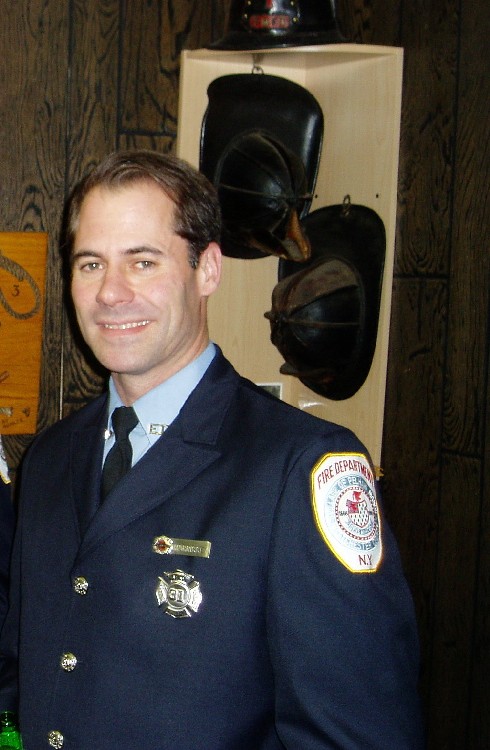
But the training is strenuous. To be a trained firefighter, you need to complete an 80 hour course with simulated and live fire training exercises. The turnout gear is heavy and hot even before going into a fire. When you’re inside a burning room with an air-tank, you can barely see or hear anything because of the noise and inherent confusion at each scene. Like my reserve experience with the military, my volunteer firefighter experience has taught me great respect for the Professional Firefighter. As a Volunteer Company, we train once a month and respond to calls when we can. Professional/Career Firefighters usually respond to several calls everyday – and at every hour of the day.
 I really like to have discussions with insightful people. I thought this was going to be mostly on all things Open (there is a good deal of that, don’t worry), but I came away thinking here’s a guy that really knows where he’s going and what he’s doing. I found his answers to my questions fascinating and I hope that you do also.
Doug delves into the beginnings of IBM’s Software Group, strategy issues, pattern recognition to solve problems, the future, the most important skill at IBM and IT analysts.
What is your job title (and what does that really mean as far as your job)?
Director, Software Group technical strategy,
I wear a number of hats. I sit in the headquarters of Software Strategy Group and we worry about big picture issues. We plug holes and identify issues that span all the brands in Software. We worry about things like emerging technology and globalization as well as marketplace landscaped issues. We worry about the Venture Capitol efforts, Strategic Alliances, and things like Open Source.
I have a number of operational responsibilities including running the Open Source Steering Committee for SWG. We process and approve Open Source use, distribution, donations of code or programs, and ensure that proper legal and business reviews are done. We also deal with compliance to mandates about strategic platform support. common criteria certification, and accessibility legislation issues. These mandates are put in place to insure that the IBM platform of middleware products are as collectively valuable as possible. All of the pieces of the software portfolio need to be coordinated for proper delivery. All components need to be there making a cohesive platform and we help coordinate that. I’m also the sponsorship executive for the International Collegiate Programming Championship. That’s a lot of fun.
There are always interesting issues to be considered, questions to be asked and answered, and cracks that need to be filled. We do this also.
Besides the operational side of my team’s responsibilities, we have the bigger strategy side. At any given time, we are working on many strategy projects. We look at the Open Source world and viable business models. We are working hard on the Open Document Format (ODF) strategy for IBM. We provide some support for our field and government relations teams. We are exploring issues like the convergence of VOIP and data network and the kinds of next generation mixed modal applications that become possible, real-time systems, and community effort around building Enterprise Service Buses. In other words, we oversee a lot of activities and projects.
I have a team of bright creative people and we build virtual teams bringing together some of the best minds from across the company including those from research for pattern recognition to solve problems.
When I speak at high school career days, I obviously get the question “what is a strategist” To answer this I show the kids a series of charts of various different technology trend lines over time such as memory density and price, storage density and price, networking speeds and broadband penetration etc… and then I ask them, If you knew all this what would you invent?” The answer turns out to be an I-Pod. A strategist looks at patterns and how they collide to create new opportunities to innovate and invent. We help identify these trends and make recommendations about what IBM should do to capitalize on them.
We also do a lot of ad-hoc consulting for various projects across IBM. We are on numerous advisory boards on a variety of subjects.
How did you get to where you are.. Do you have some work experiences that you would like to relate?
I took a non traditional route.
I started working for IBM right out of college in 1989. I did my under graduate work in Politics and Economics, then did my graduate work in International Economic and Social Administration at the University of Grenoble in France. I’m a second generation IBMer, an IBM brat so to speak. My dad was the CAD/CAM guru for Canada. After graduation, I was looking around trying to figure out what I wanted to do and my dad suggested that I interview with IBM, so I went through the interview process, and at my final interview with the Montreal Branch manager I asked him “why would you hire someone like me?”
The answer is one that I still remember quite clearly and that I relate to new employee classes and to high school students at career days. It went sort of like this: “The stuff we do here you can’t learn in school, the stuff we are going to be doing in 6 months….. – we haven’t invented yet. I’m going to send you to school for 8 months to learn what it takes to succeed in this business. You will never stop learning. You will read 100’s of pages of journals every week and will attend many courses every year, The people I hire have demonstrated a passion for learning. That is the most important skill you can have at IBM”
I’ve been fortunate to have many different career experiences at IBM. This is certainly one of the great things about working for a company with the size and breadth of IBM.
The first thing I did was being a CAD/CAM specialist, sort of following my Dad’s footsteps. Soon after, four of us from across IBM Canada were recruited to become the first sales people for a fledgling software business… what would become the Software Group. That grew into Operating Systems, LAN, and a number of other things. From there, I went to Ottawa as a Sales Specialist.
Fate then stepped in when, as a result of my frustration on hearing all my customers relate how they had been to Redmond to hear the Microsoft story, I wrote a 2 page business case arguing that we should build a capability to explain the big software story and the value of all our middleware products as a platform. At the time you had to go to a lot of different places to here about a lot of different parts of IBM Software. I argued in my paper that we should develop a customer program that became known as “Software in Action”. It was also more frequently referred to as the Ron (Sebastian) and Doug show. Mike Rhodin (now Lotus GM) happened to be at a briefing center when we were doing this, saw us, and subsequently asked us to do it worldwide. After this, I went to pervasive computing and ran standards for 2 years and became chairman of the SyncML initiative (a standards organization for data synchronization), Then I managed strategy for pervasive computing. Then I moved to the SW strategy group to work with government and open standards, and was subsequently promoted to my current position.
What is unusual is that after 17 years, this is the first job I’ve ever inherited from someone else. All of the others were invented, In fact they were all newly created jobs. But it all ties back to the lecture on learning at my IBM interview.
What I love about working at IBM is the rate of innovation and change. We are always doing new and interesting things. We went from tabulating to the 360, from mainframes to services. We are always reinventing and making the transition leap to the next generation of technology, always adapting to new market dynamics and changing customer requirements.
It’s interesting, when I speak to new employee classes, to explain to them that everything I’ve done has been somewhat accidental instead of having a planned career. It is difficult to chart a career progression in a company like IBM because the landscape and technology is so dynamic.
One new employee in one of these sessions said to me “I think I understand what you are trying to tell us….There will always be new opportunities to do new and interesting things… always be prepared to take advantage of a new opportunity when one presents itself. There are always new ways to do something and be prepared to embrace them.” I couldn’t have said it better myself.
Any hobbies or fun stuff you want to discuss?
I don’t have as much time as I would like. My passion is my children and they are my joy. I love coming home and finding out what they did during the day and reading to them. I’m also an avid skier and I play guitar. I love to canoe and camp. In fact my summer job before IBM was as a canoe guide.
How do you describe what you do to your family and those who don’t work in our industry?
The simple answer is that we try to figure out what the world is going to look like in 5-7 years and try to make recommendations on what to do about it. Part of the art, the challenge of this, is that world is a long way away from where we are todays. Articulating some wonderful vision about what the world might look like to a general manager who is worrying about this quarter’s earnings is tough. You have to bridge today and tomorrow and lay out the steps to get there, a pragmatic approach with intermediate steps. You need to tell the story of the journey.
What are good things about your job?
I have the privilege of working with extraordinarily bright people. They are fun to be around and I have a great opportunity to learn something new every day. I get to work on the leading edge, It’s creative and imaginative. We try to turn research into something real and relevant.
What are things you would change?
I need more in-box discipline. My scope is so large, I speak a lot and am away a lot of the time, so I need to do better at this. I’m convinced there is an important business opportunity in helping people (like me) to manage the volume and complexity of information they are exposed to. I also thought an Inconvenient Truth was true, later to find out it was political propaganda.
What are the biggest challenges at IBM?
The traditional business challenge of “how do you grow?” Where do we go from here? How to continue doing what you do well while trying to be well positioned for emerging opportunities? Part of it is cultural and creative, Part of it is agility. We have an advantage because of our strengths and insights : our intellectual property, our smart people, our global presence All of these are better than anyone in the world. Figuring out how to grow, how to leverage our strengths has always been an issue. Transition has been a big strength of IBM. The current Open issues (like ODF and Linux) are ushering in another transition period. We have to avoid the “Innovators dilemma”. We have been successful in transitioning across various disruptions in our long and storied history. I think we are very well positioned moving forward.
Have you considered being a blogger?
I may get to it, but time is an issue. It’s a matter of discipline. I talk to bloggers all the time. I think I would enjoy it very much. It’s a fascinating phenomenon. The challenge is much of what I’m doing are not things that are ready to be blogged during the thought process, as we may not be ready to share them yet.
Since analysts read this, what would you like to say to them about Strategy and IBM?
Frankly, I view the relationship with analysts as a partnership. My job is to get as many data points as possible and to synthesize them. The analyst community has deep insight that is a significant contributor to what I do. We’ve been doing a lot of deep thinking as well which I’ve been told by many analysts has relevance to their thinking. I consider my interactions with analysts as a dialogue. I enjoy the analyst community tremendously. They provoke my thinking and serve as a sounding board for our ideas, It’s a partnership of discovery.
What are you looking forward to in the upcoming years, either product or how you will work differently?
I’m excited about the people aspect of business productivity. We’ll continue to focus on integration and optimize IT, We will deliver on the potential of SOA, and componantization, but I personally believe the next big piece of productivity comes from the people side of the equation.
My laptop, and my head for that matter, have information that would help others do their jobs. If they could use what I have, it would save them time. We haven’t come anywhere near realizing the potential of focusing the expertise of our people in solving customers’ business problems. My out of control in-box dilemma, for example, is indicative of this potential for productivity improvement. We need to work better, work smarter and expand the productivity potential. We need to focus on optimizing human creativity and potential on solving problems.
We need to bring software tools to the market that provide better visibility into business performance, facilitate better decision making through highly parallel analysis of the efficiency of different scenario’s and focuses the expertise and creativity of knowledge workers. If we could gather and have access to all of the information and research on the many distributed computers and in the heads of many individuals in or organizations, find a way to get it, organize it, make sense of it and make it available to the right people in the right context, we could save months of discovery and development time.
Another area I’m very excited about is the profound impact deep computing will have on our society. We are deploying deep computing capability that is allowing us to model human protein folding. It’s like the introduction of computer modeling in the automotive industry. Through that process, we shortened the product development cycle from 9 years to 9 months. The potential for innovation in biotechnology, pharmaceuticals and medicine is tremendous.
The other phenomenon that I find extraordinarily fascinating, and very fundamental, is the trend towards openness and community based development. We are in the midst of a process of rebalancing the role that intellectual property protection plays in our society and at the same time the internet has provided us with this extraordinarily efficient and cost effective means to collaborate. As a result I think that the rate and pace of innovation will continue to increase. It is a very exciting time to be in the information technology industry.
Unfortunately, Doug then told the world that he thought that the movie “An Inconvenient Truth” is the most important movie ever made. I watched an entire audience lose respect for him at that point. It prompted me to write this post.
 Today is a very special interview for me. Harriet heads up two critical areas for IBM, and it goes without saying that both are important and sensitive. These issues must be handled accurately and with dexterity. Harriet excels at her job, and you’ll read that she is very qualified to do so.
As with each of these blog-erview’s, it’s a peek into who they are and what they do. Harriet spared some time to speak to me for this and I found her both interesting and enjoyable to speak to. I’m most grateful that she granted me this gift.
As I’ve said before, I’m a blogger, not a journalist. Harriet did a Podcast with Scott Berinato that you’ll also find interesting.
What is your job title (and what does that really mean as far as your job)?
I’m IBM’s Chief Privacy Officer and VP of Corporate Affairs. Being CPO means I’m responsible for what IBM does with data about clients, employees and other people. With the amount of data we are responsible for managing globally, it shouldn’t be a surprise that we are committed to leadership in this space. I’m responsible for our having the right privacy policies and processes to advance that leadership. I also work on IBM’s efforts to help society meet the challenge of preserving privacy in the face of incredible advances in how information can be managed for value and insight. We have a conviction that technology and solutions can do a lot to protect privacy, to enable the balance of privacy expectations and the sharing of data.
I also coordinate the efforts of a team of executives who lead IBM’s engagement in important social and policy initiatives, such as intellectual property, open standards, health care and workforce issues.
Some prior work experience that you can tell?
I have checkered past (just kidding)! What I mean is that I’ve been lucky to be exposed to a lot of different disciplines and fields, which is, as the world gets more complex, a good thing. I majored in engineering and worked first with Shell Oil, drilling for oil in the Gulf of Mexico. Wore a hard hat and coverall, complete with the Shell logo (still have the outfit in case any needs a Halloween costume). I then went to law school and followed my passion for energy and environment issues to a law firm in Washington.
But I never really LOVED my jobs until August of ’93 when I joined IBM, in the Government Programs group. I got to represent IBM on a range of public policy issues, some that drew on my previous background, and lots that didn’t–like energy efficiency, healthcare, labor and retirement policy. I first started working on privacy issues in 1997, as part of that group.
Lou Gerstner appointed me Chief Privacy Officer in late 2000, and I kept that responsibility while I did a fantastic two-year rotation in Human Resources in corporate and in IBM’s Systems business. I loved learning about the business from a different perspective,
After that, I went back to working on policy issues, now as corporate affairs VP.
Any hobbies or fun stuff you want to discuss?
Sure. My main focus outside of work is my family–I have 2 kids and a husband who’s the home parent. And, of course, Jack our Schnoodle (cross of poodle and schnauzer–the ultimate in hypoallergenic dogs…in case any of your readers have allergies). My daughter and I sing in a 90-woman chorus that sings four part a Capella harmony, barbershop style. We’re available for singing valentine and birthdays. Want to hire me? 😉 (again, just kidding!). But check them out:Potomac Harmony Chorus
How do you describe what you do to your family and those who don’t work in our industry?
IBM is a global company that helps businesses and other institutions to innovate, and my job is to work across our company on projects that drive innovation on societal and policy issues that matter in this day and age….issues such as healthcare, privacy, security and the emergence of new ways to communicate such as blogging. These are interesting and exciting issues that need leadership and I’m fortunate to be part of the team of folks that work on them.
Recently IBM made an announcement about genetics, can you comment about that?
Yes, Steve Lohr of the New York Times wrote an article about it. I particularly love a piece in CSOonline.
There were factors that led us to adopt a policy on genetic information. We looked at what’s happening at the leading edges of health care industry..what’s known as information-based or personalized medicine. Genetics are being used to figure out who is predisposed to a disease or who is less susceptible. People are concerned that information might become available and used to harm them, e.g. deny health insurance. In our effort to improve quality of healthcare for our own employees, we realized people were afraid of the information being shared, perhaps they might lose health insurance, or not be eligible for insurance if applying for a new job.
So, we changed our global employment policies, saying that we were not going to use genetic information that employees might share with us, to make employment decisions, e.g. health insurance coverage decisions. IBM’s proud of our history of being ahead of the curve on equality and non-discrimination issues. This issue is another one where we are ahead of others in committing not to discriminate against someone based on something that, after all, can’t be changed and is very personal: one’s genetic makeup. In the US alone, we provide access to health insurance for over 500,000 employees, dependents and retirees, so our policy change was noticed and, I might add, welcomed by a lot of folks. (Wash Post editorial). I’m very proud of that.
What are good things about your job?
I work on some of the most interesting and important issues of our day, and work with incredibly smart and committed people in business, government, non-profits and within IBM.
What are things you would change?
In high school, take up a foreign language like Mandarin. Travel more in Asia.
How did you become one of the lead executives for blogging at IBM?
Before it was organized, a group of dedicated bloggers came up with some guidelines on their own (working on a wiki!) so as to not to run afoul of IBM policies. Through networking, they got connected to a few of us in corporate headquarters. I worked with a team of experts from HR and Legal to “polish up” our bloggers’ guidelines and build support for them around the company. Truthfully, it wasn’t hard to do at all, since our bloggers had done most of the work themselves….we just coordinated the effort to release guidelines and provide more tools and enablement to our growing community of IBM bloggers. Last I checked, we have over 16,800 registered on our internal blog central site, and lots of them are blogging externally. As a privacy expert, and ex-HR executive, I am fascinated by the potential for blogging and related phenomena for individuals, media, society and of course business–potential that’s both positive and, at times, uh, challenging. Good cocktail conversation, for sure.
What is your vision on the future of privacy?
It’s inevitable that our expectations of privacy–and how we achieve them–will change over time…they always have, if you think about it, stretching back to the origins of human society. I think that the next decade will be hugely important to develop the right set of public policies and private sector privacy and security practices, especially as we become increasingly networked as individuals (think blogs, blackberries, sensor-enabled credit cards) and as enterprises. It’s inevitable that we’ll become more comfortable sharing information–just look at what teens are willing to write on their blogs! But at the same time, people will demand accountability and transparency–WHO has data about them, WHAT are they doing with it, and HOW can we make sure I don’t get harmed?

I am most privileged to be able to offer this blog interview of Bob Sutor. Bob was one of the first links I had when I set up my first RSS feed, still a neophyte to the blogosphere. He has graciously agreed to my interview series for which I am most grateful.
This is a very interesting read, with subjects ranging from guitar’s to calculus and polynomials. If you think that PhD’s aren’t witty, read the story about his son at the Gartner conference. Being a Trekkie, I’d like to teleport also.
I asked some questions with analyst’s and open standards in mind, and you will find the answers most revealing.
What is your job title (and what does that really mean as far as your job,)?
I’m the IBM VP for Standards and Open Source. Basically, this allows me to stick my nose into anything we’re doing on those topics. I work with my team to make sure that we have consistent management of these activities across all the business units in the company. I work closely with our intellectual property folks to ensure we are striking the right a balance between “open” and more traditional ways of doing things. Then I like to tell people about all this.
Some work experience that you want to tell?
I started work for IBM in 1982 when I was between my two stints in grad school. I spent 15 years in IBM Research working on “symbolic mathematical computation” (instead of thinking of a spreadsheet and what it does, think of a system that allows you to manipulate things like polynomials and matrices and do fancy calculus computations). My main job before working for IBM was a paper route. I was very involved in IBM’s early work on web servcies, particularly the standards bits and how we worked with other companies. Although I consider myself a technologist at heart, I spent almost two years as Director of Marketing for WebSphere.
Any hobbies or fun stuff you want to discuss?
After a 34 year hiatus, I started trying again to learn how to play the guitar last December. Progress is slow, but satisfying. I’m using it as an excuse to learn about music as well. I was always told that people who were good at mathematics were also good at music, but felt it didn’t apply to me. It still might not, but at least the evidence will be empirical rather than anecdotal. I do wish I had started a lot earlier.
How do you describe what you do in your work to your family and those who don’t work in our industry?
Last April I was on an Open Source panel at the Gartner conference in LA and I brought my (then) 7 year old son. He learned a fair bit about the ideas behind it but he really has no sense of, say, what enterprise software is. (He loves Firefox, by the way.) For people outside my immediate family, I tell them I help do things that make computer systems made by different people work together. By the way, the Gartner folks were really great to my son and gave him a badge with his name on it and the word “Companion” where the company name usually goes. He told me that when he grows up he is going to start a company called Companion so he can get into future conferences for free.
What are good things about your job?
I love the broad range of things I get to look at on an everyday basis. I also like working on things like the initiative we announced in October around use of our patents for healthcare and education standards. That is, when we get to do things that might change the direction of the industry, it’s really exciting.
What are things you would change?
Shorter, more efficient conference calls would be a good start. I like travelling and talking to customers, people in industry and government, but I wish that the actual travel time getting there and back wasn’t so consuming and tiring. I think often of Star Trek-like teleportation and wish we could have that today.
What are the biggest challenges at IBM?
Because of our size, there are so many things we do do and could possibly do. There is simply not enough time to do it all. Prioritization is therefore really important. I really value people who are good at that as well as being very efficient communicators. In the area in which I work, the world can change radically every six months. I also value people who accept if not thrive on that.
How did you get started as a blogger?
IBM developerWorks asked me to start a blog in August, 2004, when I was working in the WebSphere area on web services and SOA. I had written byliners for trades like CNet for a few years, so it was actually liberating to be able to say things on a more regular basis in more or fewer than 800 words. I also have a personal blog which is being sadly neglected, but I have big plans for it if I ever get some more free time.
How has that changed your job?
I’ve done probably 75% fewer press interviews but I get my views out more precisely and frequently. In addition to saying whatever I want to say to people outside IBM, I can also talk in a public way to people inside IBM via the blog. It gives me a chance to explain nuances of things to whomever might be interested. When I do meet new people in the industry or members of the media, I’ve often told that they’ve read my blog. That allows us to immediately jump in and discuss things at a deeper level without a lot of background explanation.
Since analysts read this, what would you like to say to them about Standards?
People need much more guidance on what the word “open” means. I think analysts need to start quantifying how open the various standards efforts are in areas like development, maintenance, accession, implementation, and ability to sub-or superset. That is, we need “openness report cards.” Not everyone will be on the honor role, but companies and governments are looking for this information today. As various people have said in business, it’s hard to change things if you can’t measure them.
What are you looking forward to in the upcoming years, either product or how you will work differently?
I’m looking for standards and open source to give me and other people a lot more options in how we get our work done.
Any thing else I missed you want to say?
I think it is really wonderful how something like the OASIS OpenDocument Format is breathing life into the office suite category of software. Standards and open source software themselves do not have to be immediately innovative in order to drive some really innovative and stimulating things downstream. In both of these areas, you must think of the work you do as being an investment in the future. If you take intelligent risks, you can reap big rewards. If you risk nothing or hang on to the status quo too long, others will move past you.
I’m proud to start out the week with an interview that I’ve anxiously anticipated for a while. John Mihalec is the head of IBM analyst relations, no small task. I learned some very interesting things about John that I never knew, and I hope his work background will be as interesting for you as it was for me. Especially the political stories.
I have great respect for those who have served our country. This interview includes stories about analyst relations being analogous to the court room, poking fun at me for flattering the boss and comparing major political operatives to influential IBM executives. Enjoy the read as much as I did.
What is your job title (and what does that really mean as far as your job)?
VP, Analyst Relations. It means that if any IT analyst anywhere in the world criticizes IBM in any way, by spoken or printed word, I have a problem. Since analysts make a living by (among other things) assessing vendors, and since IBM is the biggest, most comprehensive and complicated vendor, most days I have a lot of problems. But it also means that most days I have immediate, tangible, urgent opportunities to make a difference for IBM. And that’s fun.
Some work experience that you want to tell?
Well, I started out in politics, driving the campaign bus for Lowell Weicker’s first (and only) race for the House of Representatives in during my summer vacation in 1968. After graduation, I worked for Weicker on Capitol Hill for a year. After being drafted into the Army and Vietnam, I worked for him again on the Senate side while he was on the Watergate Committee. It was during this period that I also briefly had a second job as a ghostwriter for a retired FBI official named Mark Felt, who was then still telling everyone (including me) that he was most assuredly not Deep Throat. In 1976, with Weicker coasting to re-election, I left to join the White House speech writing team for President Ford. We gained 30 points in the polls in two months, but ended up losing to Jimmy Carter by a single point. After that, I worked as a speech writer for Illinois Governor Jim Thompson. Then I got tired of needing a new job every 18 months and joined IBM. Getting married also may have had something to do with it.
How do you explain what you do to non-IBM’rs, family or those that don’t work with you.?
It’s not easy given that most people don’t know who the IT analysts are, or what they do. Often I start out by asking, have you ever heard of a company called Gartner Group, or Forrester, or IDC? A few people have, and that makes it easier. I’m going to my 40th high school reunion this weekend, so that will be an interesting test of my ability to articulate it succinctly. Ironically, the reunion is being held less than a mile from Gartner’s headquarters, but I doubt that will increase the level of awareness about IT analysts among my classmates. We’ll see. Anyway, with family and friends I generally tell them that in the computer business there are all these research firms who write about the industry and provide advice to customers about what to buy, at the same time they also provide advice to the computer vendors about how to sell. (Listeners often see that as having, shall we say, inherent ethical challenges. But I assure them those challenges are completely manageable.) And then I say that it’s our job in Analyst Relations to make sure these research firms understand IBM’s products and strategies, and become convinced that IBM is doing the right things for customers. It’s also our job to listen to what the analysts are saying about us, and to make sure IBM harnesses the wisdom in those assessments.
What are good things about your job?
It gives you a lot of opportunity to be creative. Sometimes I tell people it’s like being an attorney in a courtroom with no judge and no rules of evidence, but just a jury….a professional jury that has heard case after case, and they’ve heard it ALL. And it’s our job to bring before that jury whatever facts or logic we can muster to make the case. Because IBM’s success in the marketplace depends on it. When you think about it that way, it’s a lot more exciting and challenging than most other jobs. Just don’t expect a TV show about analyst relations to replace Law & Order.
What are things you would change?
Honestly? I’d give me the same responsibilities, but more power and money to do the job. Most of our AR resources are dependent on unit budgets, and corporate spending targets. If it were only my call, there are people I’d move from here to there (probably China, India and Japan), and units that would spend more or spend less on Analyst Relations than they do. Generally, I see a dollar spent on AR as being more effective in driving business results for IBM than dollars spend in some other areas, such as mass media advertising. But IBM is a matrix, and I have to work within that matrix politically. No surprise there.
You manage one of the most (if not the most) effective analyst groups in the industry. Can you talk about why that is and how it came about (without giving away secrets)?
No flattering the boss, okay? If IBM has an effective AR program, it’s because: 1) a quarter century ago a guy named Sam Albert recognized that we needed to engage analysts as part of our selling process, and 2) certain senior executives (e.g. Steve Mills and others) were hip early on to the impact that analysts were having and the importance of managing our relationship with them in a dedicated, formal way, and investing sufficient resources to do that properly. I’m just the guy who’s been brought in to drive the truck over the last few years.
You deal with some of the most powerful executives in the industry. How has that changed the way you work?
Well, I worked with some fairly influential people in Washington before IBM. One time, during the Watergate hearings, Sen. Howard Baker leaned over and asked me if I had any questions for the witness. But I was just sitting in for Weicker at the last minute, had no idea who the witness even was, and declined. Wish I had a photo of that now, though. Compared to politicians, information technology executives are generally less egotistical and easier to serve and support. But they are also less used to being knocked around than politicians are. That makes some industry executives wary about going toe-to-toe with analysts. So the key variable in AR for our executives is not how they deal with us, their staff, but whether they are “fully there” when they engage the analysts. They should engage the analysts with respect on a level playing field, because there is gain to be had in both directions. Vendors executives can learn a lot , from analysts at the same time they seek to influence their views and sell “their story.” So it’s worth doing, and doing well, despite that fact that analyst criticisms are never easy to hear. The best IBM executives at all levels instinctively work to cultivate relationships with this key influencer community.
What do you think your legacy will be given all that has been accomplished at IBM Analyst Relations?
I expect the next person in this job will do it better than I have, and I will be disappointed and amazed if that doesn’t happen. This a march, and we learn something new every day.
What is your vision of the future for Analyst Relations.
What is your vision of the future for Analyst Relations.
My vision is that we will help IT analysts to increasingly focus on business issues (not just technology), that we will improve IBM’s ability to leverage their output to drive business results, especially in emerging markets, and that we become change agents and allies with them on societal and governmental issues where we have a common view, on behalf of the industry we both serve. And get home by 6 o’clock.

I’m especially excited today, as this interview with Ed Brill is the first (in what I hope is a series) about IBM bloggers. Ed was nice enough to help point out that my RSS feeds got messed up when I switched templates. He performed this act of kindness when he didn’t know me from the next guy at the airport, which as you’ll read is where he’s been quite a bit lately. In another act of kindness, he stayed up late from who knows where to complete this interview.
When I first got on to blogging, Ed was one of the first guys at IBM I read. I encourage all of you to add him to your feeds.. He can also be found at developerWorks. So without further adieu…..Ed Brill.
What is your job title (and what does that really mean as far as your job)?
Business Unit Executive, Worldwide Lotus Notes/Domino Sales. I’m responsible for the success of these products in-market worldwide. That means I work outward — with IBMers, partners, customers to provide the right solution with Notes/Domino, and inward with product management, marketing, development and support to make sure we are building a successful product.
Some work experience that you want to tell?
I’ve been at Lotus for a little more than 11 years. I’ve had a variety of roles: pre-sales engineer, Notes product manager, Domino product marketing, Notes/Domino offerings manager (what most companies call a “brand manager”), Lotus competitive strategy leader. Before IBM/Lotus I was in IT at US Robotics, FTD, and Indiana University Computing Services. I’ve been “online” since 1988.
Any hobbies or fun stuff you want to discuss?
I really enjoy travel and photography. I’m fortunate that my job takes me to all corners of the planet, and I’ve visited 45 countries so far (30+ for business). I rollerblade when I can. I work out of a home office in my hometown, which is a really interesting thing when you consider the global nature of our company and specifically my role.
How do you describe what you do to your family and those who don’t work in our industry?
Heh — I tell them that I’m responsible for selling Lotus Notes. We have good brand recognition so a lot of people know the product even if they don’t use it. My mom used Notes at her last job before she retired. If they don’t know Lotus Notes, I just tell them I work in computer software or “internet stuff”.
What are good things about your job?
My job is an MBA-by-fire — I get involved in all aspects of running a market-leading, mainstream product for IBM. I get to talk to customers every single day. I work from home, and love the flexibility that offers. I work with a product that gets press and analysts talking, that draws customers to conferences, and that continues to confound and irritate my competitors. Most of all, I have met and continue to meet some really amazing people.
What are things you would change?
I’d like to be able to get more mindshare for my product within IBM. I’d like to be able to react to market conditions more quickly than sometimes is possible.
What are the biggest challenges at IBM?
IBMers have hundreds of solutions we can talk about with customers — hardware, software, services, business consulting, training, even financing. Our competitors like Microsoft and Oracle get to have laser-sharp focus when they talk to CIOs and CEOs. It would be great if I could have every IBMer talking to every customer about Lotus Notes. I’m sure every product leader at IBM would say the same thing 🙂
How did you get started as a blogger?
My friend Volker Weber encouraged me to try it out, not necessarily with a goal in mind but because I’ve always enjoyed writing publicly. Over time, it evolved into a way to continue the one-to-one interaction I’ve had with customers in our online product forums over the years, with more focus.
How has that changed your job?
I consider my blog to be a critical part of how I can be successful in my job. I get a sense as to what is going on in the market, and my customers know that they have a source for up-to-the-minute, unfiltered information. I’ve been able to win in the market, and especially been able to defend against competitors who are more liberal with their use of fear/uncertainty/doubt in the market, all through the voice of the blog and the blog-o-sphere.
Since analysts read this, what would you like to say to them about Lotus?
The analysts are mostly saying encouraging and positive things about Lotus these days. I’ve been pleased that they mostly recognize that Lotus has successfully passed through a technology transition period, and that the Lotus business is presently successful and growing. I think what I’d like analysts to consider is more around applying a critical eye to some of the messages coming from my competitors, either about their actual vs. perceived success or the robustness of their solutions.
What are you looking forward to in the upcoming years, either products or how you will work differently?
I’m really looking forward to the evolution into a full contextual collaboration era, with some of the tools IBM Research has been building for the last few years coming into actual shipping products. Specifically, I’m really interested in convergence of mobile/pervasive devices, instant messaging and VoIP, and other tools that will really be intelligent about message delivery and filtering.
Any thing else I missed you want to say?
I think the market will notice soon that there has been a huge increase in the number of IBM bloggers in the last few months. We have some strong and important voices, and my IBMer blogroll grows by the day. We might not have been the first company to embrace blogging, but it’s becoming increasingly important in how we embrace the IBM values around customer success and personal responsibility. I’m not afraid to tackle the tough questions customers are asking, and I think more and more we will see supply chain and vendor transparency like that in-market.
What’s the saying, if you can’t stand the heat, get out of the kitchen? We’ll not us.
Right now, some of the hottest industry issues are falling into our lap. In no order, SOA has a lot going on, Maturing workforce issues and the ISV ecosystem heat up the fire. I know Lotus 7.0 is out there, but I’m hoping an upcoming interview with Ed Brill is going to cover that. Tivoli is active too, so I was harassing the a/r manager to be an interview so he can tell you what’s up. Don?
The SOA crowd has been full steam ahead lately (wish it was still talk like a pirate day , could use some lingo here). Nancy Riley’s team has been pumping out the work like banshee’s. This subject if executed properly by the industry can have a life of its own, and it’s only the tip of the iceberg. I know this as I discovered in tangential conversations with analysts, I’ve heard that many things can be a service like compliance and CRM, and that wrapping services around packaged applications is an issue.
Next is the Maturing Workforce dilemma. If you recall, the last presidential campaign told us that a lot of boomers are coming up on retirement. These are the guys and gals that brought us through the age of hardware/software/bandwidth/innovation/devices and you name it we can’t do without today. That’s a lot of skills and experience which are maturing. IBM has its’ act together and has a plan. All you have to do is read about this and you’ll see that issues dealing with transition to accessibility are covered. I’ve heard from no less than Amy Wohl that we have a story here.
Ah, and my burner, the ISV ecosystem. For some reason, recent acquisitions seem to have skewed the thought that if you don’t buy an applications company, you can’t play in the game. Guess what, the numbers aren’t supporting that story. I’ll let the statisticians tell you how much share CRM and ERP have in the application ecosystem, but for sake of this argument, I’m going with 15-20%. That leaves 80% or more to the rest of the applications out there.
So instead of buying a company just to keep up with the jones’, we’re sticking with our partners instead of competing with them. When it comes time to show up at the customer, we’re not going to be bringing our own application, we’re bringing the ISV Partner. We’re giving them programs and advertising buckaroos to help them.
Oh, and did I mention that we have the IBM sales force helping ISV’s?
So things are hot, and we’re in the middle of it, right where we should be.
The interview today is going to be with Jeff Jones, from the Information Management or Data brand. Analyst relations has a wide range of skill and abilities, Jeff is on the expert side of subject content. Enjoy the read.
What is your job title (and what does that really mean as far as your job)?
My official title is Senior Program Manager, and I work in the Information Management part of IBM Software Group in Analyst Relations.. I haven’t been able to figure out what exactly this title has to do with my job, but that seems to be the norm in IBM.
Some work experience that you want to tell?
My background has involved a variety of software assignments. I started as an application developer in Purchasing Logistics for the division of IBM that built disk storage systems. SAP ERP software has replaced the software we built back then. A brief stint in IBM Research working on mechanical engineering graphics applications taught me about applications outside the norm of commercial business applications. Another brief stint in a corporate software strategy group taught me about the value of standards and the power of software integration. A long series of assignments in our database software group developed in me a huge appreciation for the genius in our software development laboratories and for the need to translate what happens in the labs for those on the outside that are perhaps not quite as completely immersed in it day to day. My current assignment allows me the privilege of communicating the latest and greatest to many constituents outside IBM: analysts, consultants, press, partners and customers.
How do you describe what you do?
In the whirling vortex of activity around Information Management, I work with IT analysts and consultants in two ways. First, I work to deliver our news and to educate this community about our Information Management software with a focus on database engines (Cloudscape/Derby, DB2, IMS, Informix, U2). Second, I work on behalf of our organization to seek guidance, criticism (always constructive) and comment from the analyst community to help us plan our future. Also, from time to time, I’m called upon to serve as a spokesperson to IT reporters and as a connector of reporters with analysts. Finally, I serve on the editorial advisory board of DB2 Magazine as a behind-the-scenes editor of this quarterly publication.
What are good things about your job?
What I enjoy most about my hybrid job is the constant and unblinking reality check it provides. No blinders are allowed; hyperbole is forbidden; acronyms are seldom tolerated. no one is allowed to drink the “koolaid”. Personalities and relationships have special value in this job. Clarity and brevity are the most precious attributes of every conversation. The team with which I work is a wonderful.collection of devoted professionals that make it a joy to open the in-basket, web browser and message window in the morning. A creative sense of humor is shared by all, and invoked often.
What are things you would change?
I would rewrite PowerPoint to allow no more than 10 charts in any presentation. I would rewrite Notes’ calendar feature to disallow the creation of meeting invitations that lack at least five sentences of explanation as to the purpose of the meeting. I would also remove the recurring meetings feature of Notes’ calendar.
Name a funny analyst story.
I know a couple of funny analysts, but they won’t let me tell their stories here. I’ve also noted that a significant number of analysts with whom I’ve worked share a love for music. This is comforting. One is a scuba diving instructor. Analysts are people too.
Describe an analyst win situation for you.
All analyst “win situations” seem to stem from periods where communication lines are open and used frequently, interesting IBM news is emerging, and customers are backing us up. It’s hard to lose in these situations.
Describe an analyst disaster for you. (no names)
Analyst disasters always seem to involve confusion and the poor handling of the aftermath and sometimes the “beforemath”.
What would you like the analyst’s to do differently, suggestions of what would help both sides maybe.
I’m not sure I’m in a position to tell analysts what to do., differently or otherwise. I’m happy to have them suggest to me what to do. So both sides of your question are covered.
Any thing else I missed you want to say?
Customers seem to be the key to success with our analyst community. Revenue is good; testimonials are good too. I know this isn’t rocket science. I would ask for continuing patience while we work on convincing more of our devoted customer base to share their devotion with the analyst community. Again, it’s all about communication pipelines kept open and relationships kept strong.
One of the threads I’m going to follow from time to time will be interviews of some of the analyst relations team. My goal is for analysts to get to know us better and to hear our side of the job, first person. I play requests, so if there is an a/r rep you want to hear from, let me know. Also suggest questions that I’ll include.
Today’s guest is Cameron O’Connor of the Rational A/R team.
What is your job title (and what does that really mean as far as your job).
Analyst Relations Program Manager is the actual title, and I think it reflects accurately what I do every day. Let me break this into two parts. 1) Analyst Relations: No matter how negative current feelings are towards a particular analyst it really is our job to maintain that relationship. Just because we don’t agree with or don’t like a particular analyst’s opinion, it should never mean we stop talking. Maintaining that open line of communication is probably the single most important thing I do for IBM. 2) Program Manager: although a lot of the time it feels like I am herding cats, I really am responsible to bringing to market a particular program, a particular set of deliverables. I need to manage my internal constituents as much as my external ones
How do you describe what you do?
You know when you are sitting around the table at Thanksgiving and you get asked, “So what is it exactly you do?” I have come to the realization that it is pretty hard to describe what I do without getting a blank “deer in the headlights” type of stare. I usually boil it down to this, “I work for IBM Software Group in their communications department. I do something similar to PR, but I work primarily with Industry Analysts. You know, Forrester, Gartner, IDC… I try to make sure they understand our offerings so as to positively influence their research. If they don’t agree with our viewpoint, then I try to uncover why. If it is a matter of them not knowing about or understanding the functionality of a particular offering (which is usually the case), I educate them.” After explaining this to a friend of mine who teaches at a private school in Rhode Island, his response was, “so it sounds like you are kind of like Tony Soprano but for software” I guess he is kind of right, just without Pauley Walnuts to back me up.
What are good things about your job?
The single best thing about my job is having the chance to work with some of the smartest people in the world. Just last month I had a briefing with and analyst firm on Embedded Systems Development and had D.E. Murray Cantor as my IBM’s spokesperson. He was discussing some of the work we did on missile guidance systems for Raytheon and some of the projects we are working on with BMW. It was absolutely amazing. Everyone in the room was captivated for 2 ½ hours straight. It made me feel very proud to work for IBM and to have the opportunity to interact with these types of folks. It’s what gets me up in the morning.
What are things you would change?
The internal bureaucracy and politicking wears you down a bit. But what doesn’t kill you, only makes you stronger or something like that.
Name a funny analyst story.
There are no funny analyst stories 😉
Describe an analyst win situation for you.
There are very few instances when I can walk away from a single situation and say, “that was a huge win.” It is really an iterative process. Small steps forward sprinkled with a few back eventually get you where you need to be. I think the easiest most recognizable “analyst wins” happen without direct communication with the analysts. When a report or reference is used by our sales team to help close a deal – that is when I feel I have a big win. That doesn’t happen overnight. It takes a lot of time and effort to chip away at that boulder.
Describe an analyst disaster for you.
I worked for Forrester Research for 4 years before coming to IBM. While I was there I was working with IBM to set up an analyst consult for a very senior software executive and some of our software analysts. The AR manager and I were in communication daily before-hand and had a few prep calls to nail down the agenda. When we finally got everyone in the same room, it quickly became evident that things were not going as we had expected. We had not set the same expectations with the exec or with the analysts. One side was looking for a strategy discussion while the other was knee deep in features and functionality. It taught me a very valuable lesson: communicate early and often DIRECTLY with ALL parties involved. It sounds simple, but with travel schedules and booked calendars getting two parties on the same playing field is an easy thing to mess up. Communicate, communicate and over communicate.
What would you like the analyst’s to do differently, suggestions of what would help both sides maybe?
One firm is very good at publishing its list of research that they are working on 12 months out which is hugely helpful in planning, determining roles, and carving out responsibilities. It is really a shame that more firms don’t do this.


 Delusions of Adequacy
