I originally posted the story below in 2006 on the death of my Father.
I’ve been blogging since 2005. I’ve covered IBM, Analyst Relations, Covid-19, humor, pets, sarcasm, and introverts.
Unfortunately, my condition declines and I can’t keep up with blogging.
A few people have extended their best wishes. Some posted what they liked about it, which I found interesting. Some found themselves (those who didn’t know they were introverts).
If you could, leave a comment as to what you liked, or if by chance I helped educate you on something.
I’ve enjoyed it, but all things come to an end, and so this is it for Delusions of Adequacy. Thank you all for reading.
I’m leaving the blog open because there is a lot of educational subjects, probably 10,000 memes and some stuff that made it to the top of Google for a while.
Original post
My Father passed away today and I won’t be posting for a while. I’ll leave you with this story.
The Wooden Bowl
A frail old man went to live with his son, daughter-in-law, and four-year-old grandson. The old man’s hands trembled, his eyesight was blurred, and his step faltered.
The family ate together at the table. But the elderly grandfather’s shaky hands and failing sight made eating difficult. Peas rolled off his spoon onto the floor. When he grasped the glass, milk spilled on the tablecloth.
The son and daughter-in-law became irritated with the mess. “We must do something about Grandfather,” said the son. I’ve had enough of his spilled milk, noisy eating, and food on the floor.
So the husband and wife set a small table in the corner. There, Grandfather ate alone while the rest of the family enjoyed dinner. Since Grandfather had broken a dish or two, his food was served in a wooden bowl.
When the family glanced in Grandfather’s direction, sometimes he had a tear in his eye as he sat alone. Still, the only words the couple had for him were sharp admonitions when he dropped a fork or spilled food.
The four-year-old watched it all in silence. One evening before supper, the father noticed his son playing with wood scraps on the floor. He asked the child sweetly, “What are you making?” Just as sweetly, the boy responded, “Oh, I am making a little bowl for you and Mama to eat your food in when I grow up.” The four-year-old smiled and went back to work.
The words so struck the parents that they were speechless. Then tears started to stream down their cheeks. Though no word was spoken, both knew what must be done.
That evening, the husband took Grandfather’s hand and gently led him back to the family table. For the remainder of his days he ate every meal with the family. And for some reason, neither husband nor wife seemed to care any longer when a fork was dropped, milk spilled, or the tablecloth soiled.
On a positive note, I’ve learned that, no matter what happens or how bad it seems today, life does go on, and it will be better tomorrow.
I’ve learned that, regardless of your relationship with your parents; you’ll miss them when they’re gone from your life.
I’ve learned that making a “living” is not the same thing as making a “life.”
I’ve learned that life sometimes gives you a second chance.
I’ve learned that you shouldn’t go through life with a catcher’s mitt on both hands. You need to be able to throw something back.
I’ve learned that if you pursue happiness, it will elude you. But, if you focus on your family, your friends, the needs of others, your work and doing the very best you can, happiness will find you.
I’ve learned that whenever I decide something with an open heart, I usually make the right decision.
I’ve learned that even when I have pains, I don’t have to be one.
I’ve learned that every day; you should reach out and touch someone.
People love that human touch – holding hands, a warm hug, or just a friendly pat on the back.
I’ve learned that I still have a lot to learn.
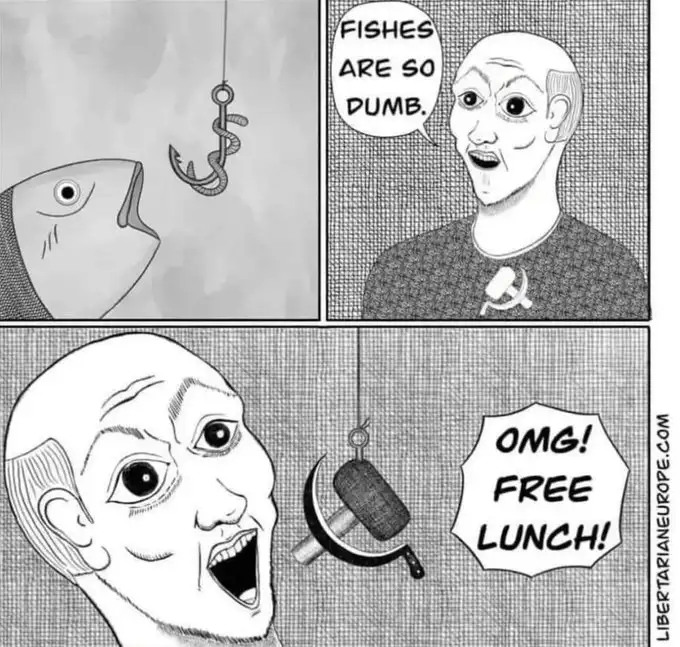
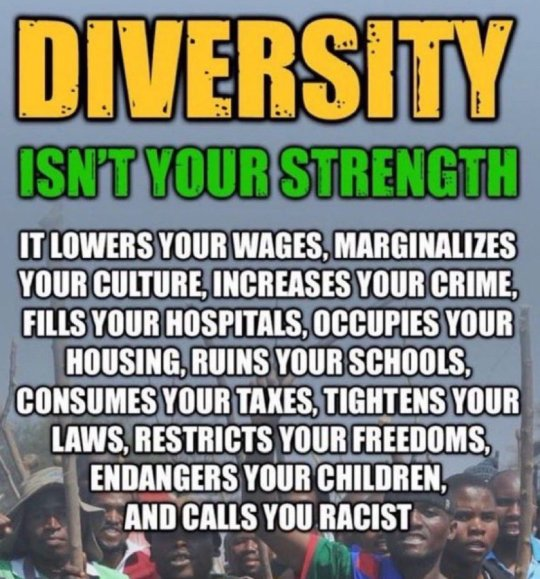
Socialism Fails: Why the Danish Model Won’t Work in the U.S. – Denmark is frequently described as a socialist success story, but the label does not match how the Danish economy actually functions. Returning to the comparison with the United States, one reason the United States does not seek to adopt the Danish model is that it functioned in a small, homogeneous society. Since the 1990s, as immigration has increased, the benefits of that model have steadily declined, crime has risen, and taxes have remained high.
Academia Embarrasses Itself…Again – look, you were either born with a dick or not. It’s pretty simple. If you have to talk around that, you don’t deserve to teach
The World Cup is More like the WWE than a sport. I’ve haven’t watched that much, but I saw a guy go down in agony with a real injury, 30 second later he was setting a record for sprinting to get the ball. It’s getting bush league
In good news Fisherman rescues 220-pound sea turtle tangled in thick ropes. (More here)
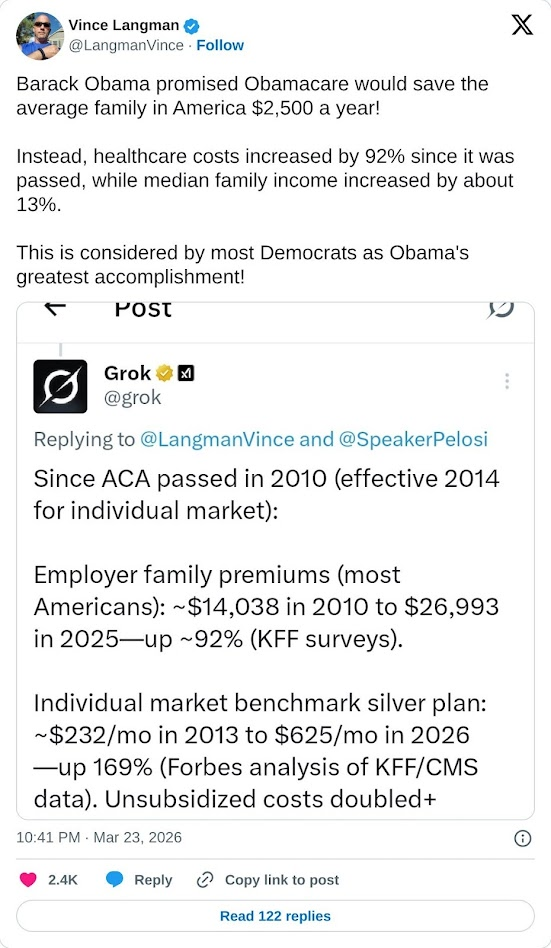
Death by Socialized Medicine – Let the Europeans brag about their substandard healthcare they get for free. They pay for it in taxes and in the long waits for bad service.
Introverted kids have an inner world that is alive and present for them. They engage with the deeper aspects of life.
As an introverted child, I split my time between a small town in Minnesota and my imagination. I was content spending entire afternoons alone, writing books on construction paper and daydreaming.
As a teenager, I had a group of friends I loved, but spending time with them drained me. They didn’t seem to need the same amount of alone time that was critical for me to function. I convinced myself that they were the normal ones and I should try to be more like them.
As time passed, I changed a lot from the shy kid I once was. I’ve written two books: The Secret Lives of Introverts and Sensitive, which was named an Amazon Best Book of the Year.
But one thing about me that hasn’t changed is being an introvert. I still enjoy writing, daydreaming, and spending time by myself. As I explain in my book, this is because whether someone is an introvert or an extrovert is something we’re born with, and it’s mostly decided by our genes. In fact, according to Dr. Marti Olsen Laney, children may start to show signs of introversion as early as four months old.
So, what are introverts like as kids? While each child is unique, many introverted children share these seven traits.
7 Common Characteristics of Introverted Children
1. Introverted kids have a deep and lively inner life.
Their private inner world of thoughts and emotions is very much alive for them. They depend on this inner world and their own ideas to help them make decisions, instead of always looking to others for approval or help. “In their private garden away from the material world they concentrate and puzzle out complex and intricate thoughts and feelings,” writes Dr. Laney.
Because of this inner world, introverted children like playing make-believe and being alone. You’ll often see them alone in their rooms or secluded places, doing things like reading, drawing, or playing on the computer.
However, this deep inner world can sometimes make them feel cut off from other kids. They might be called “weird” for having imaginary friends or for wanting to spend time alone, like sitting by themselves during recess. That’s why it’s important for parents to help introverted kids see that their introversion is actually a strength.
2. They are curious and engage with the deeper aspects of life.
Introverted kids might be quiet, but they are very curious about the world. They often ask big questions about how things work, why things are the way they are, or what something really means. They can surprise adults with their creativity and problem-solving skills, showing wisdom that seems beyond their age. Even when they are young, many introverted kids have the ability to step outside themselves and reflect on their own behavior, which is something not all children can do.
3. They observe first and act later.
Introverted kids often stay on the sidelines in groups or crowds, just like introverted adults do at big parties. They might seem shy about joining in, but it’s not always because they’re scared. Introverts, even grown-ups, like to think things through before they act, especially in social situations. You might see introverted kids open up and be chatty, funny, and playful at home where they feel safe and comfortable.
4. They make decisions based on their own values, not just on what’s popular.
Introverted kids often think and feel deeply, which means they usually make choices based on their own ideas and values, not just because something is popular. They may do things their own way, picking music, clothes, TV shows, and hobbies they truly like, not just what everyone else thinks is cool. This might sometimes make them different from other kids, but it’s also good because it means they’re less likely to blindly follow others. They don’t do things just to fit in with everyone else.
5. It takes time for their real personality to come out.
Just like introverted adults, introverted kids don’t show their real personality immediately. At first, they might be quiet and keep to themselves when meeting someone new. But as they get more comfortable with that person, they start to open up more. They like to have meaningful conversations to understand themselves or others better. They’re interested in getting to know people deeply. They often try to figure out why people do what they do.
Fathers of daughters may be better workplace leaders. – Especially when they reach puberty. All hell breaks loose then.
Beatles and Swifties
Paul McCartney plays No. 1 Beatles hit for the first time since 1964. – Some teeny bopper girl who slept with half of Hollywood married some football player. People with a real life didn’t care or watch.
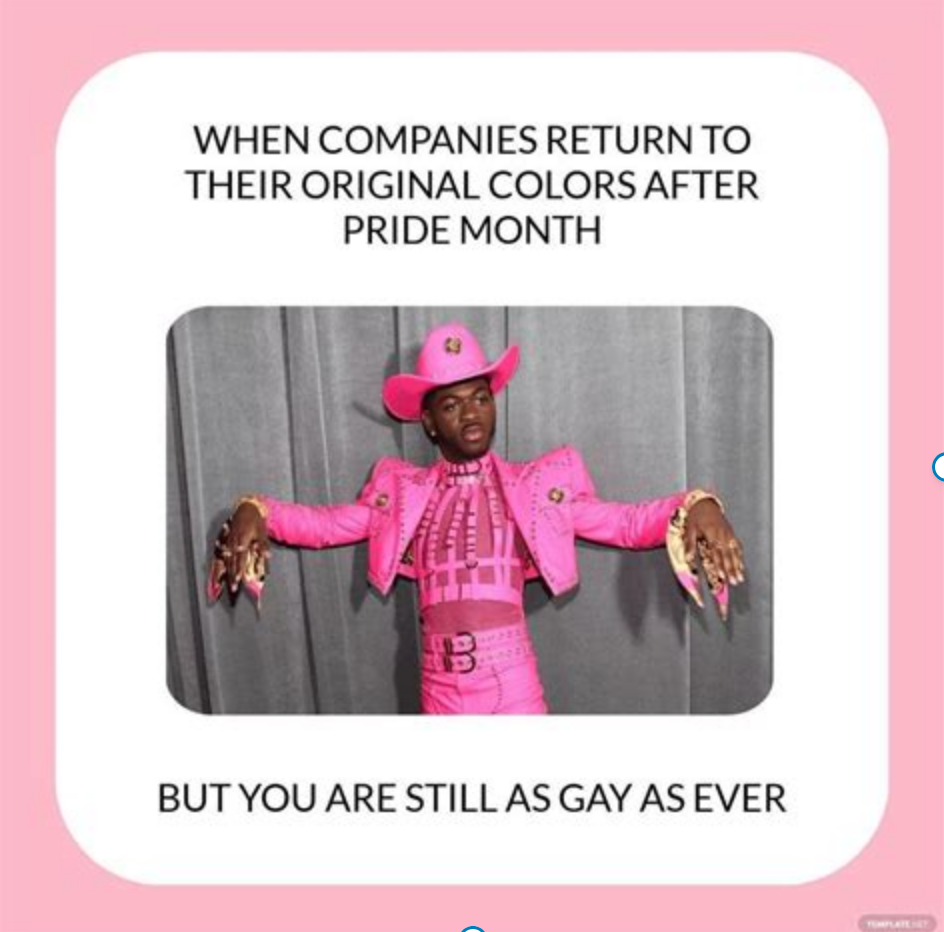
4 And the end of Pride Month, as if anyone cared. This is how 98% of the people really feel. The 2% have done a Jesse Jackson on Homosexuality to get their way. Ordinary people wish it would just go away and have people leave them alone to live their lives without having to bow to the lie that people like and accept this (other than the 2%)
The Left’s Deep Hatred of America as We Celebrate the 250th Anniversary – they also hate God. Let’s be real clear that Democratic Socialism, what they claim they are now is the same term Germany used for being a Nazi. While the Left were so busy calling everyone a Nazi, they were the actual ones.
I love this contest. I was a Kobayashi fan before there was a Joey Chestnut. I’ve been watching this for a long time. My wife thinks it’s disgusting, but her manners came from Europe and she never was in a fraternity.
He’s the top dog for a reason.
Joey “Jaws” Chestnut gobbled his way to victory once again at the Nathan’s Famous Fourth of July hot dog eating contest Saturday in Coney Island, scarfing down 66 wieners and buns in a dominant performance he said was hampered only by the scorching temps.
“Eating here on the Fourth of July is a dream; it’s electric. There’s no place better on Earth,” said Chestnut, wearing a gaudy, bejeweled Polymarket necklace, for the sports betting company, around his neck.
Joey Chestnut was the winner yet again at the Nathan’s Hot Dog Eating Contest Saturday. Stephen YangThis victory marks Chestnut’s unrivaled 18th win at the 4th of July Nathan’s Hot Dog Eating Contest.
The win earned Chestnut, 41, his record 18th coveted Mustard Yellow Belt, the Stanley Cup to competitive eaters, and $10,000. It was his second consecutive title.
On the women’s side, Florida mom Miki Sudo captured her 12th championship belt by scarfing down a gut-busting 38.75 wieners.
The temperature at the start of the men’s contest was 90 degrees, and Chestnut admitted the weather took a toll on his high-octane eating.
Spectators gather before the start of the 2026 Nathan’s Famous Fourth of July hot dog eating contest at Coney Island. AP Photo/Anna Connors
“I usually don’t have this much spare room left over, but we’ll see — something cold,” he said.
“It’s definitely hard. I didn’t want to go into it saying it’s going to affect me, I wanna go into it and convince myself that I can work through it,” he said.
“I didn’t want to let it bother me. I didn’t want to push it because if I push it, then things will get stuck in my throat and then I just needed to stay calm and keep going.”
After his win, Chestnut told The Post he still had room for dessert.
“I’m hungry, and it’s a beautiful day. This is going to be a great Fourth of July,” Chestnut told “Good Morning America” on Saturday morning. Stephen Yang
Chestnut, who has won 18 times out of 21 appearances at the internationally televised event, crushed the second-place winner, Patrick Bertoletti, 41, who managed 51 hot dogs, but was well shy of his own 2021 record of 76 wieners and buns.
In 2024, Chestnut was banned from the contest over his sponsorship deal with plant-based meat substitute company Impossible Foods, leaving Bertoletti the victor—and the first person since 2015 other than Jaws to win the contest, with 58 dogs and buns.
Defending champ Sudo, 40, said there was no way she was going to lose this July 4th — America’s 250th birthday,
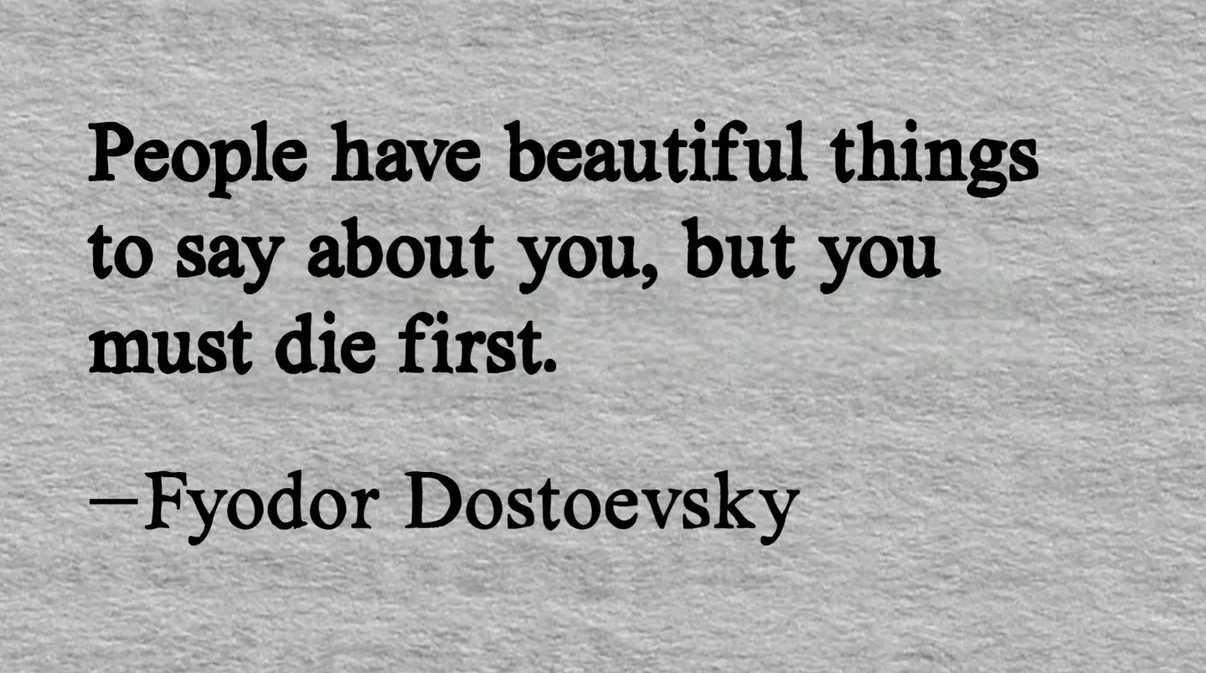
How short life is. It seems long, like in 3rd grade when I was waiting for school to end.
I’m at what will be my end in a few months. I’ve lived for decades and 2 different centuries, but like my Father told me on his 75th birthday, how did it go by so fast. I’ll never see that birthday number.
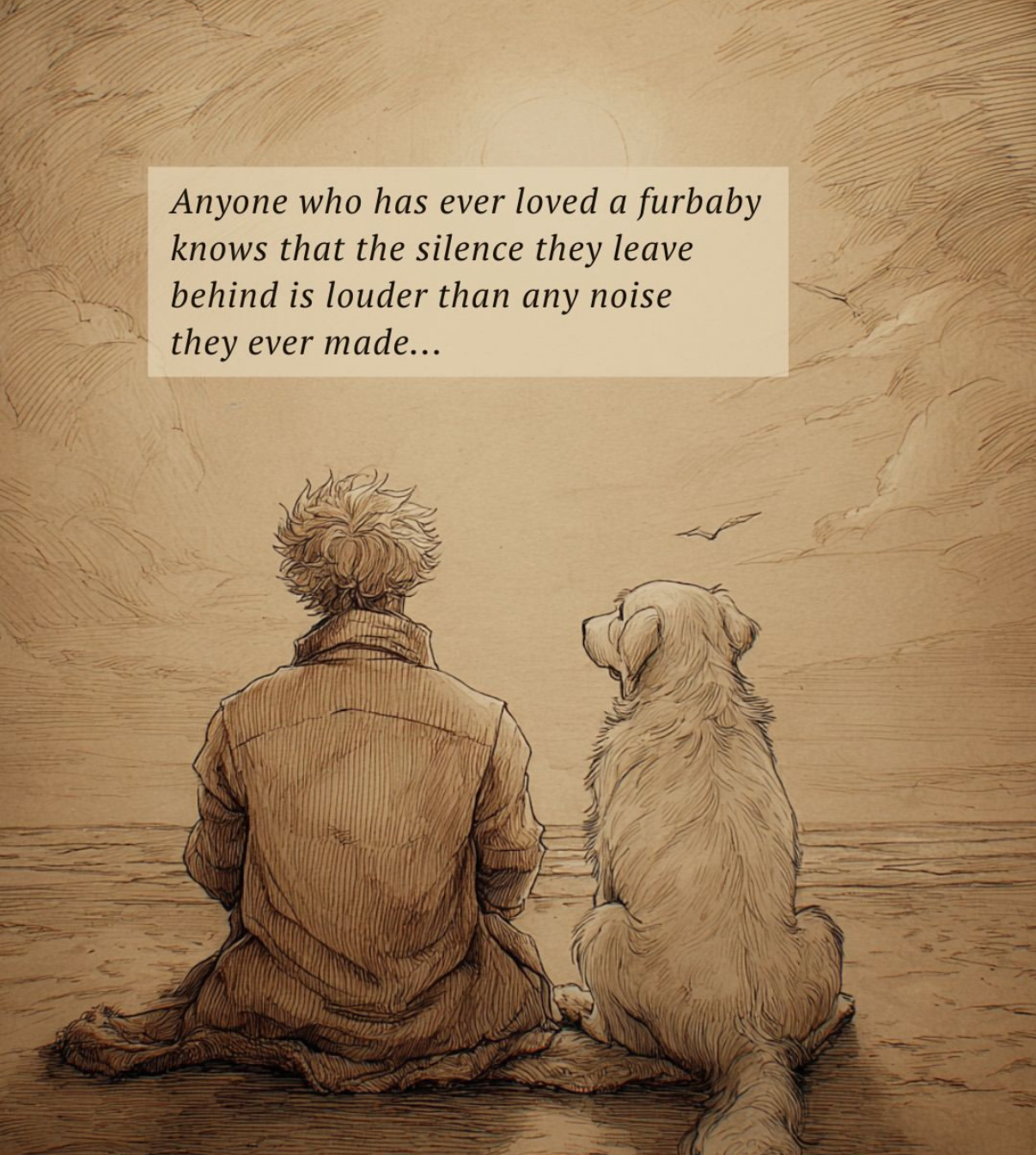
Since I’m saved, I’m not stressing over it, other than for my pets. I have family that will take care of my dog in case I go first. He’s starting to limp and might also be on his last couple of years.
I’d like to say something that would help others, but it’s going to be the same for everyone. You live, then you die, then you go to Heaven or Hell depending on your decision on forgiveness of sin.
As for me, anytime I feel something funny, like last night, I wonder how much time is left here. My time is all but over.
The cancer that is going to get me was completely a surprise, as was discovering it. That was an accident also.
Enjoy your family on this Holiday weekend. You never know when it’s your last. I do. I’m not going to see the next 4th of July, but at least I got to see the 250th Anniversary of our Country
The 4th of July for most on Earth is another day in the week, month year. Independence Day is when the greatest country was started.
For the readers of this blog, my medical diagnosis says that this will be my last one to celebrate.
I don’t want to get into it with internet pukes because what really matters is that it’s my Mom’s Birthday and the Day She died, July 4th. I’m also patriotic so I got lucky to grow up and live in the USA.
My mom was a patriot for God, but loved the USA. We were middle class and no more growing up. She lived through the depression so a dollar stretched to about $4.50 for our family. She had a masters degree in Education and Music, but chose to be a homemaker and a mother. That’s how I’ll remember her on this day.
Back to the original premise, we might have never made it to the moon, or invented air conditioning, cars, planes, trains and numerous medical advancements that have helped the world for the last 250 years.
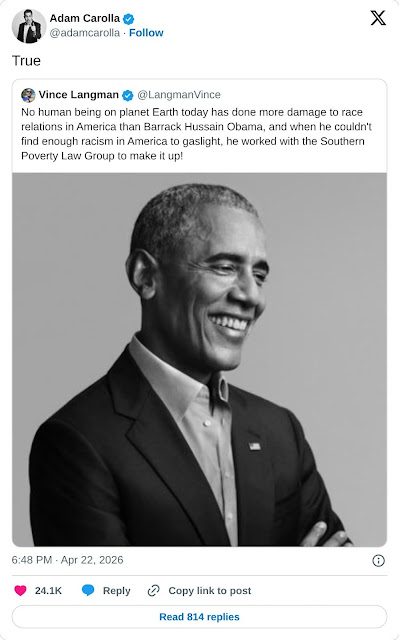
I know haters shoot at #1, so it’s the Democrats who hate the good in our country. Hating America: The Hollywood Left’s Worst Anti-American Outbursts. You can see from the World Cup that the rest of the world woke up to the fact that the media lies about the good that the USA does for people primarily because of Trump (current excuse). The media are liars vying for power by means of thought and word, but they have been against anything that is right for the country and serve their leader, the devil.
Trump will go down as either good or bad, loved or hated or how ever he goes down in history, but he’s just a piece of the last 250 years of making the world better.
I stopped going to see my wife’s relatives in Europe because they just spout the media talking points about how bad we are. I was tired of their ignorance and prejudice as the Euro press possibly hates the US more than the Democrats. I don’t have to listen to it this way. I can read the European press and find out what her family would say to me. I have very little time left on Earth, I’m not going to waste it on people who are ignorant.
Europe is a museum now of what used to be great. The USA has been the leader in most things for decades. I bet the rest of the world gets tired of hearing the Star Spangled Banner every day at the Olympics or other global sporting events (I think soccer is a 2nd tier sport despite what the rest of the world tries to tell us).
So Happy Birthday Mom, and the rest of the world should be happy that we made it as a country, especially Europe around 1917 and 1940-45. It would be one big Germany otherwise. (She’s been gone 20 years now).
No country has invented more or helped more people medically, socially and historically. I’ll give you that the art from hundreds of years ago is better and looks good in the European museums, but they are static. People are working to invent new ways of doing things and curing illness (except Covid, that was a lie we told).
No other country has a hot dog eating contest on the 4th either.
Righteousness exalts a nation, but sin is a disgrace to any people. — Proverbs 14:34
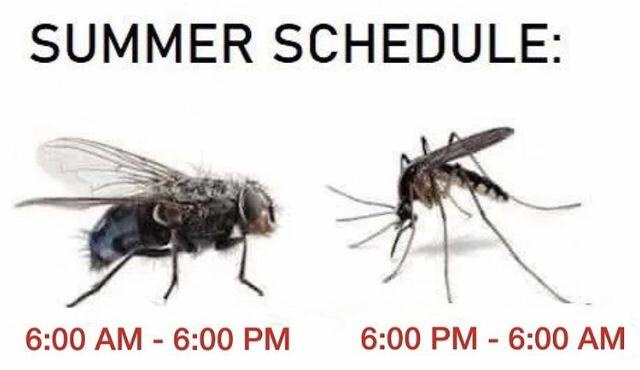
The scientific case against scratching mosquito bites. – grow up in Central Florida without bug spray and play outside. They don’t come near me now. They want new blood, not from a guy who spent his childhood getting bit. Also, cut down the alcohol and they hit the next person.
Well, it certainly didn’t help as the hype machine kicked in that Supergirl star Milly Alcock — who has all the charisma of a sidewalk and the body of a 14-year-old boy — started opening her mouth about how she’s a victim of sexism and Supergirl is queer.
And so, under the guidance of James Gunn, DC’s “new direction” is looking like quite the failure. Last year’s Superman barely broke even (if that), and now Supergirl is a notorious flop. Girls aren’t Superheros. They copy the men’s story and emasculate the men. Thats’ why men don’t go. It’s not even a believable fantasy. Most men can kick ass on them even with superpowers
Germany 1930 Repeats itself
The DSA Takes Over The Democrat Party – The first Democratic Socialists that accomplished anything were the Nazis. I wonder if the pukes at the press pool will have the guts to print that
Europe Discovers The 20th century
Did The World Cup Just Start A War In Europe Over Air Conditioning? It was a big thing in the 1950’s and 60’s here. That’s why I just SMH at Europeans who trash Americans. Their answer is that is what they read. Also a reason not to trust the media to be fair and unbiased.
When the PC was invented, I saw the future in front of me. Opportunity knocked and I answered. I did every job you could do on them.
The head of our DP department said we would have no need for any PC’s. It was as clear to me then as the PC you have for your everyday use (or more than 1) that this was going to be the future. I got in very early to the phenomenon and a decision that early in a career was very fortunate.
I retired early because of that decision and where it took me.
Over the years, countless critics have pointed out the errors both in Gore’s film and in his ensuing personal crusade as, like Don Quixote, he continues tilting at windmills (while ironically advocating for their proliferation).
(Note: This originally posted sometime around 2013, but so many people keep clicking on it, I thought I’d just post it for everyone who missed it)
This story Melt My heart so I wanted to share it. enjoy.
Being a veterinarian, I had been called to examine a ten-year-old Irish Wolfhound named Belker. The dog’s owners, Ron, his wife Lisa, and their little boy Shane, were all very attached to Belker, and they were hoping for a miracle.
I examined Belker and found he was dying of cancer. I told the family we couldn’t do anything for Belker, and offered to perform the euthanasia procedure for the old dog in their home.
As we made arrangements, Ron and Lisa told me they thought it would be good for six-year-old Shane to observe the procedure. They felt as though Shane might learn something from the experience.
The next day, I felt the familiar catch in my throat as Belker ‘s family surrounded him. Shane seemed so calm, petting the old dog for the last time, that I wondered if he understood what was going on. Within a few minutes, Belker slipped peacefully away.
The little boy seemed to accept Belker’s transition without any difficulty or confusion. We sat together for a while after Belker’s Death, wondering aloud about the sad fact that animal lives are shorter than human lives.
Shane, who had been listening quietly, piped up, ”I know why.”
Startled, we all turned to him. What came out of his mouth next stunned me. I’d never heard a more comforting explanation. It has changed the way I try and live.
He said,”People are born so that they can learn how to live a good life — like loving everybody all the time and being nice, right?” The Six-year-old continued,
”Well, dogs already know how to do that, so they don’t have to stay as long.”
Live simply.
Love generously.
Care deeply.
Speak kindly.
Remember, if a dog was the teacher you would learn things like:
When loved ones come home, always run to greet them.
Never pass up the opportunity to go for a joyride.
Allow the experience of fresh air and the wind in your face to be pure Ecstasy.
Take naps.
Stretch before rising.
Run, romp, and play daily.
Thrive on attention and let people touch you.
Avoid biting when a simple growl will do.
On warm days, stop to lie on your back on the grass.
On hot days, drink lots of water and lie under a shady tree.
When you’re happy, dance around and wag your entire body.
Delight in the simple joy of a long walk.
Be loyal.
Never pretend to be something you’re not.
If what you want lies buried, dig until you find it.
When someone is having a bad day, be silent, sit close by, and nuzzle them gently.
I could type pages on this one, but I’ll spare the readers. Most write better than I do anyway so I’m interested in their thoughts.
As for me, as soon as we meet, I throw up a wall until I can trust whomever you say you are. I also look for clues as to who they really are, not who they say they are.
For girls, I look for red flags like hair dyed in an unnatural color, excessive piercings (or one in the nose), too many tattoos (more than one hidden one. Most of all, check her friends and family. Crazy girlfriends means your petite petunia is likely been run through by a lot of dudes. Body count matters a lot too. No matter what, even if you are a way better guy, you are compared to the past.
For Guys, there is a line between confidence and cockiness. It can be smudged at first, but it shows itself. I don’t mind an Alpha male, as long as he’s decent to others. There is always a bigger fish.
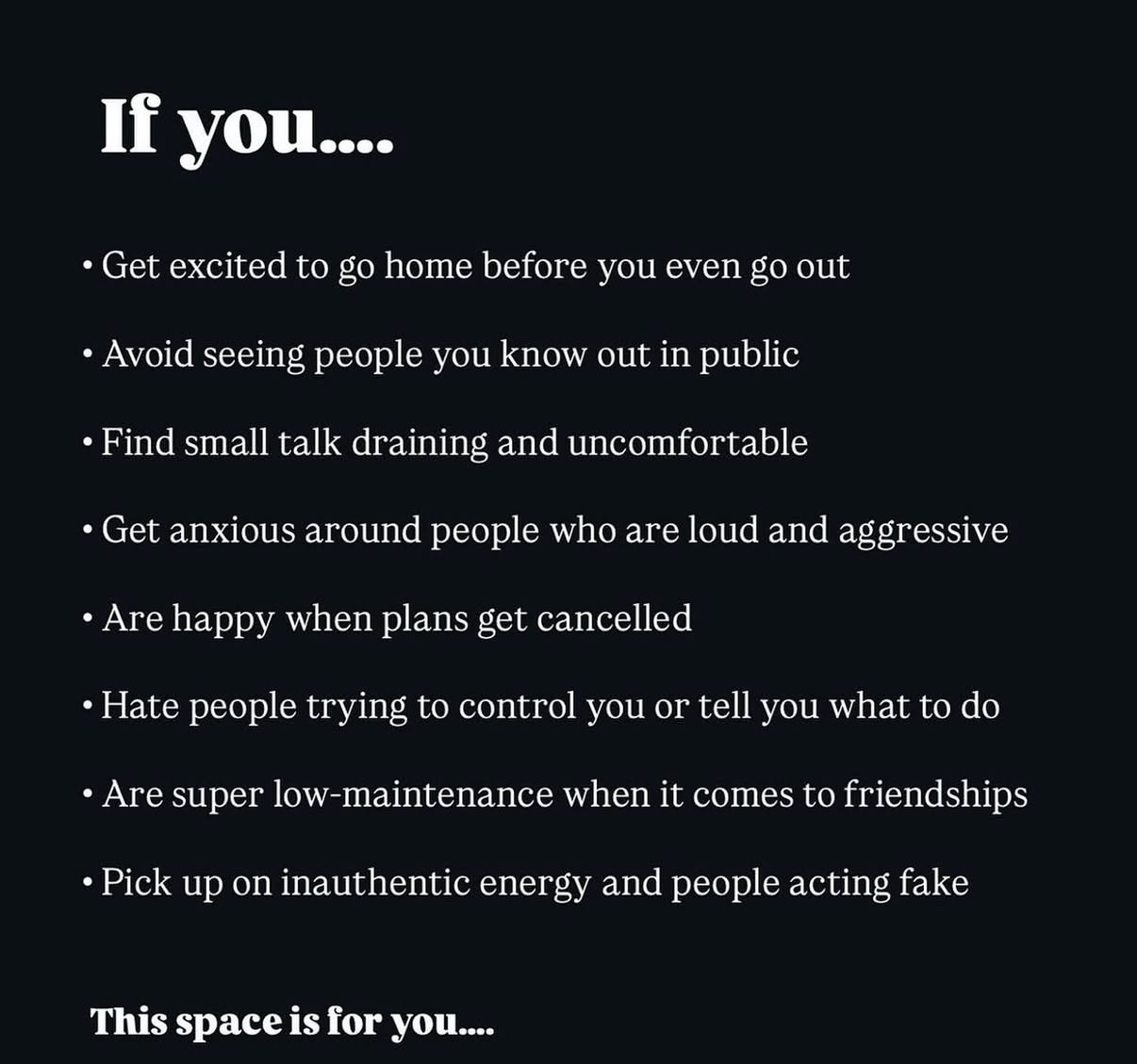
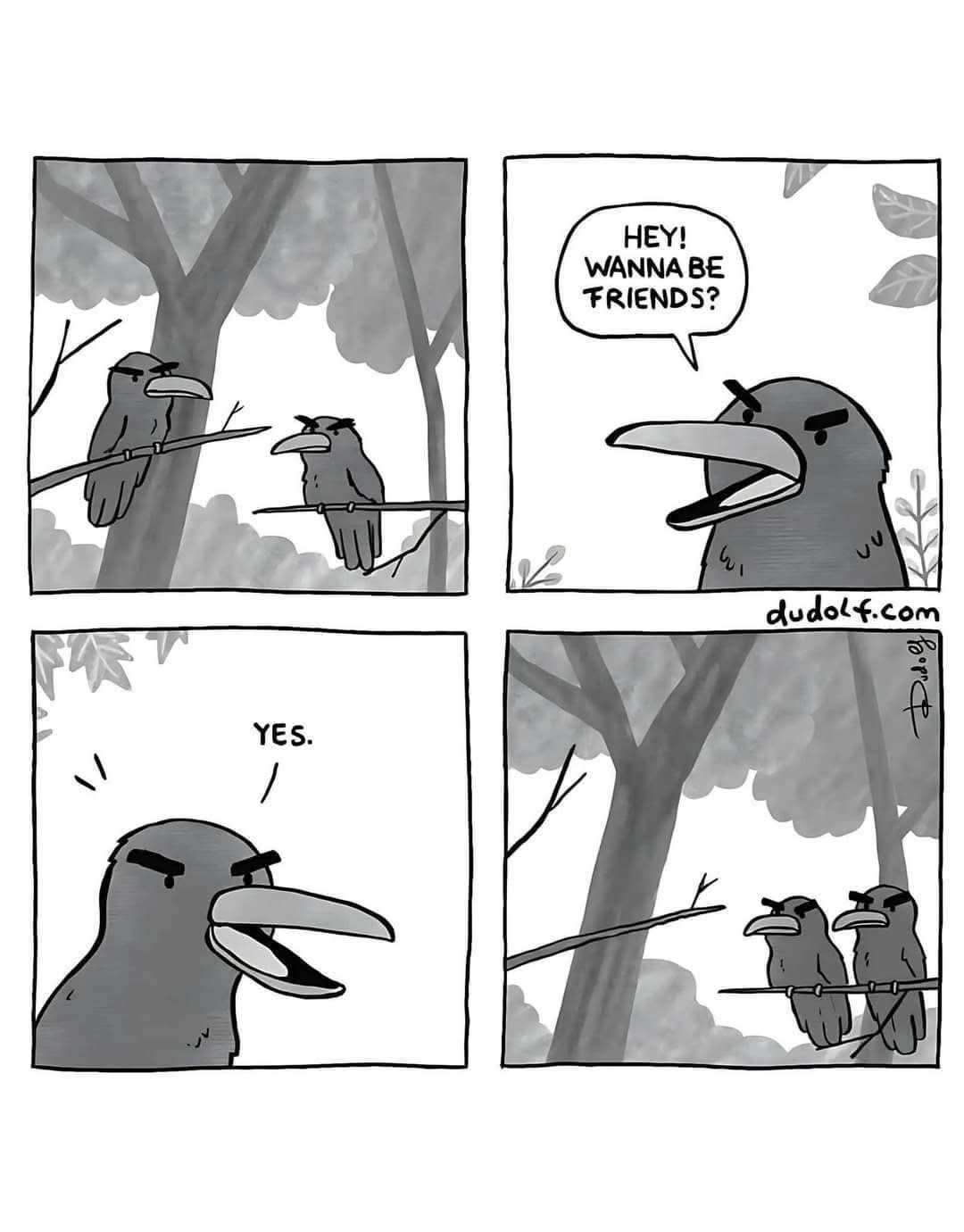
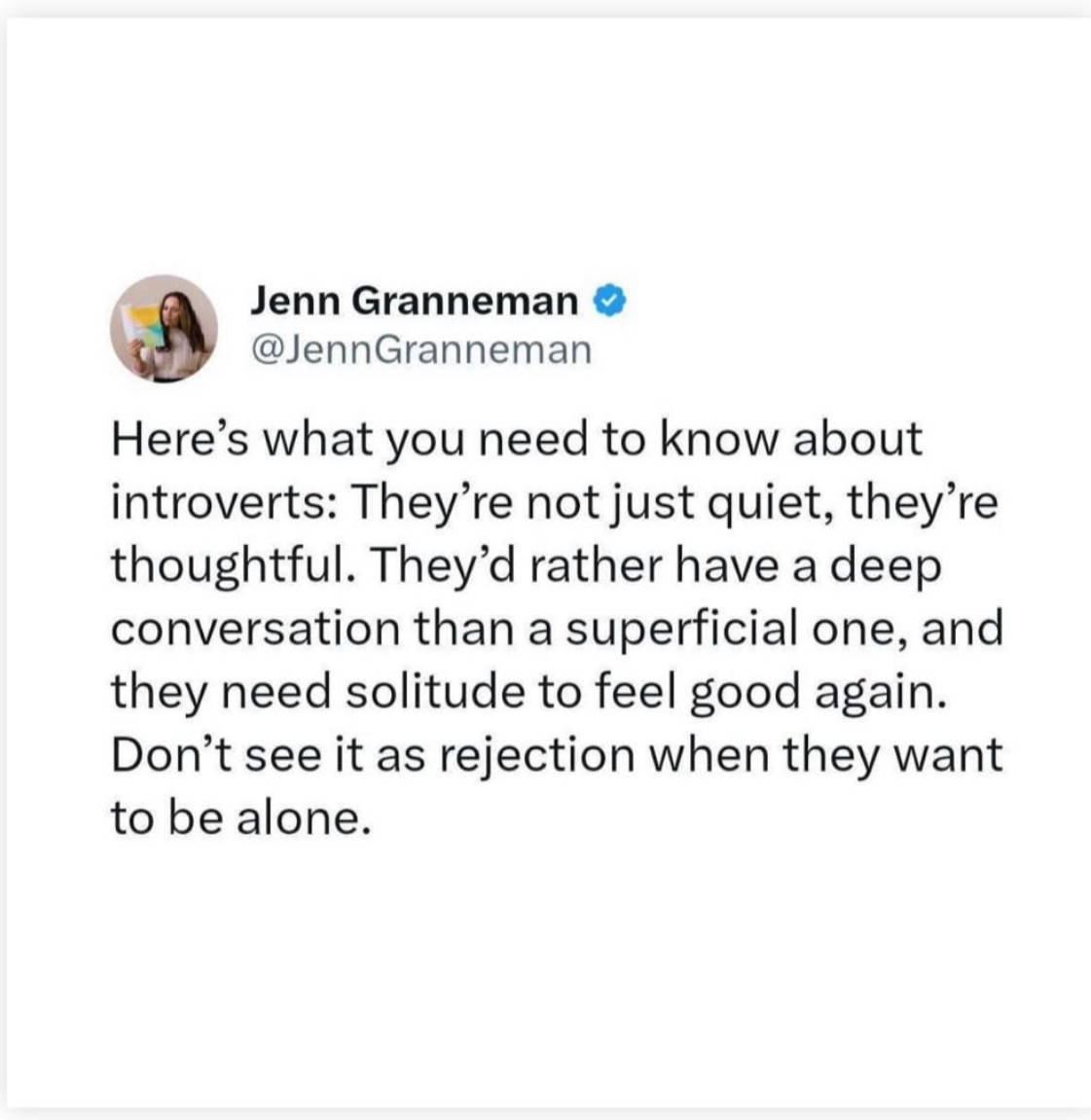
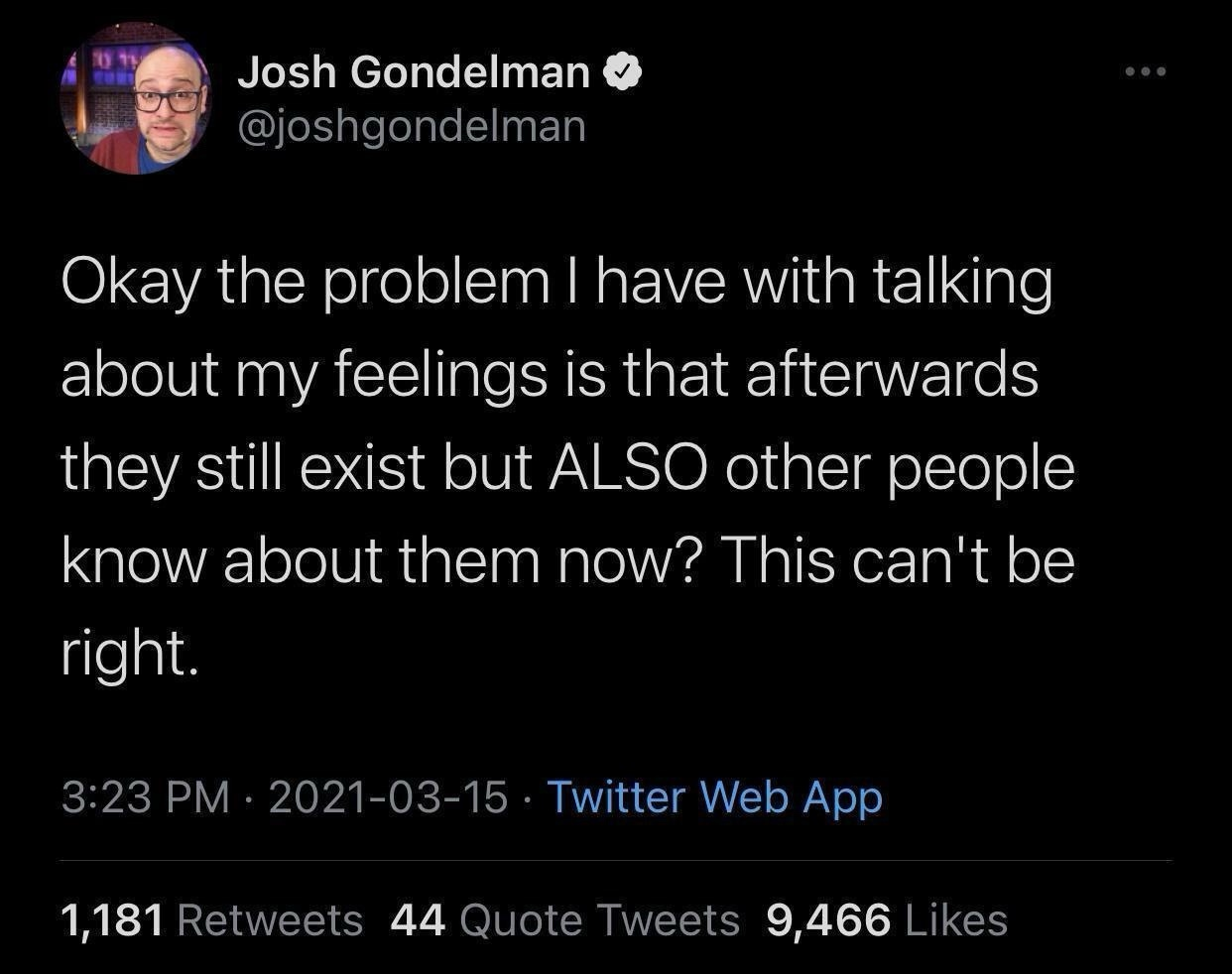
Being an introvert, anyone who talks too much small talk instead of substantive conversation is kept on the sidelines. I just can’t listen to drivel for the sake of talking. Introverts will understand this.
The first line to break a relationship for me isn’t lying, everyone does that. It’s loyalty. That is like virginity, you can only lose it once. Once it is gone, our relationship is stalled probably where it started. So far, no one has gotten a second chance. I’ll never really trust you again, despite my best efforts.
The biggest thing I learned was to not talk back immediately, say no early and often to most things, and don’t commit to doing things you know you don’t want to do. That has saved me more time from the suck portion of life than almost anything.
Like I said, I can go on, and on, but that would just be a continuation of the life of an introvert.
Unless the rapture happens before they can do it, I think we’ll be there. Man is an explorer and Musk has trillions so why not? I’ll never see it in my short lifetime
As for what it looks like, I’m going with Ceti Alpha 5. If you don’t know what that is, look up the Wrath of Khan
The World Cup and Climate Change together on a solution they’ll never find. Don Quixote-ville. Two subect that can go fake and are boring to watch and listen to
World Cup Fever Not Expected to Be Growth Driver. It’s not going to be the big event it would be in other countries, soccer, or your footbal is 4th or 5th at best in US. South America will have to hold up the Americans who care
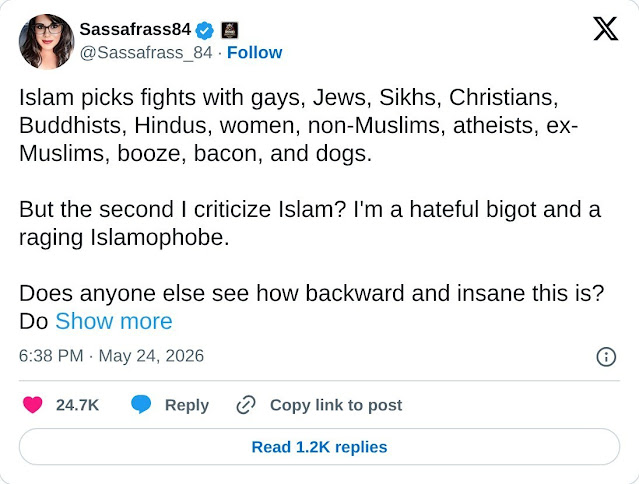
The ‘Pride Month’ Pendulum Is Swinging – I think more people are being honest that they don’t support it like they said they did. They cried wolf too many times and brought debauchery where they went.
There are times that I need to brake on some topics The chemo has me feeling almost sea sick. I still have some humor, life experience and every day stuff.
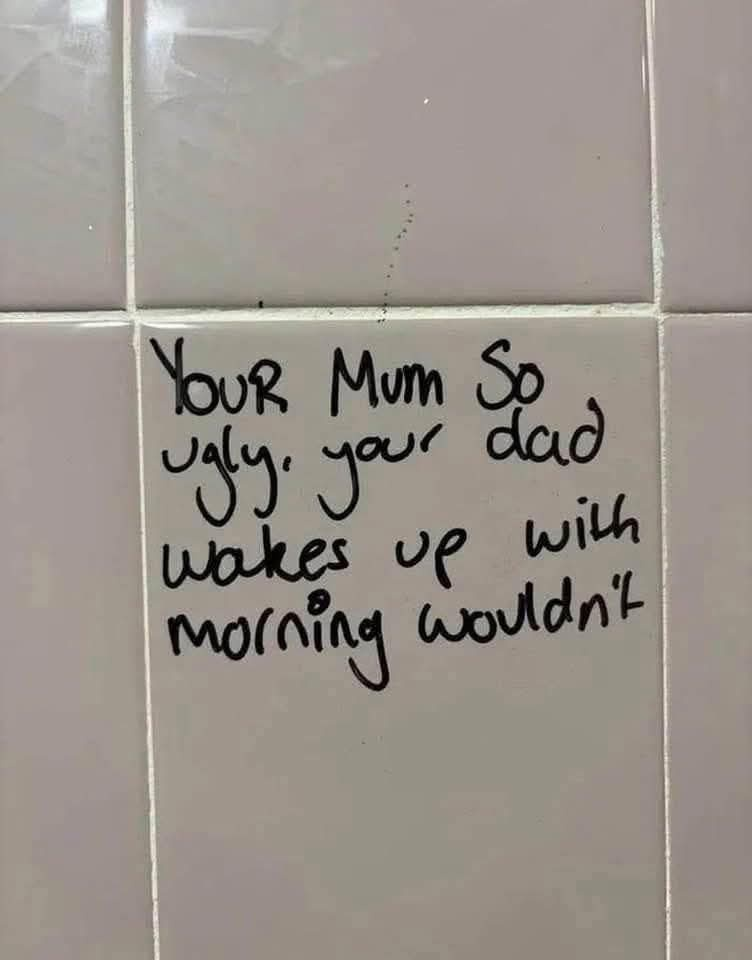
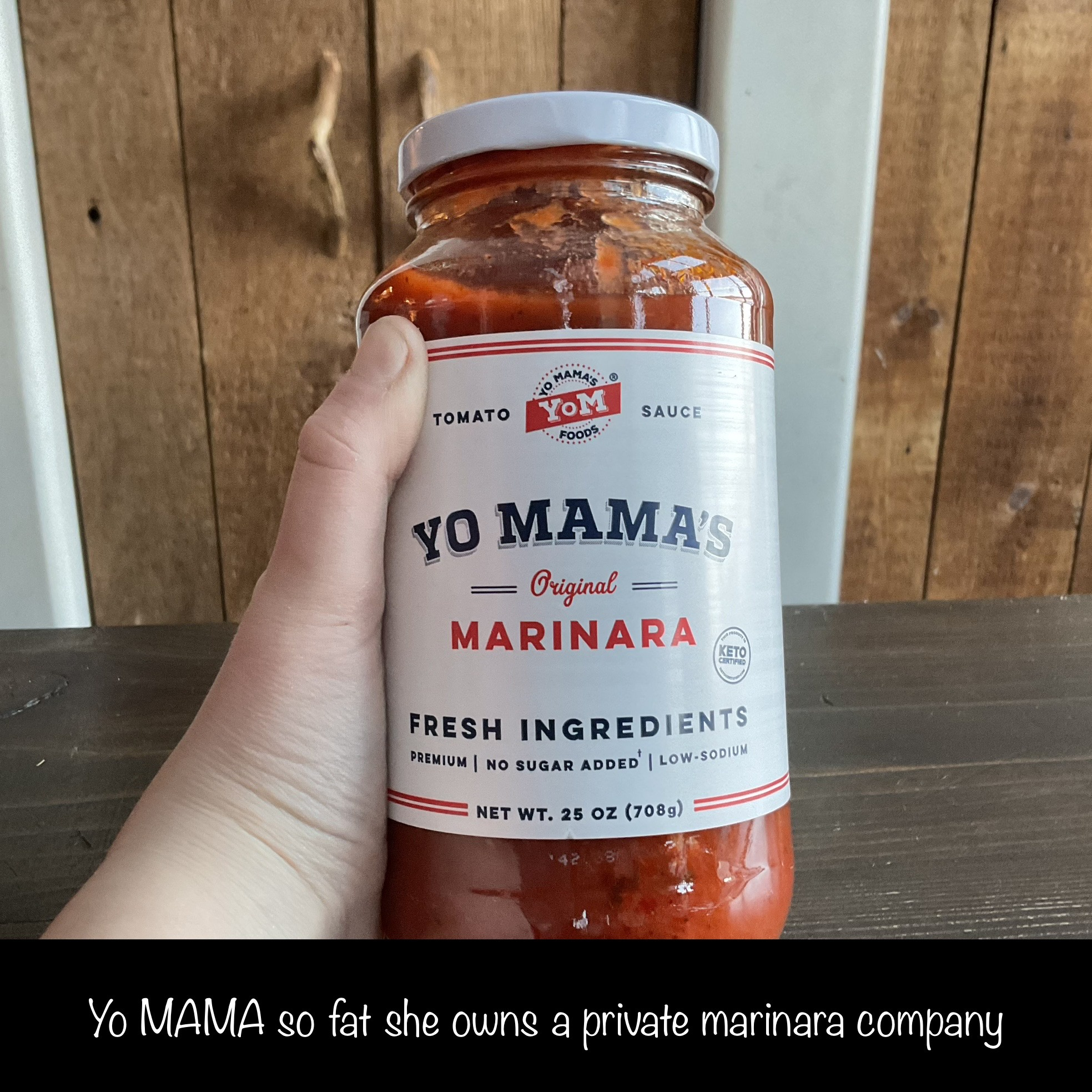
So unless I fall into the well of yo momma memes, this is the last post on this subject.. Steal them as I need to clear cloud storage space. They are high on my list to remove for the space in my cloud storage
I lose more readers on this category than any other I post about. Try to get that it’s a joke and doesn’t represent who I am, other than I thought some were perfect.
It used to be getting a fast car or a bigger house. The signs are always there. When you make money, you spend it just as easily.
Some want to be a Rocket Builder as a side job and is pulling off stuff NASA would only now be in planning meetings for.
Other, with a Musk type mood and wanting to have a dick measuring contest to see who makes that better rocket.
In this case, it’s one to Musk just for not doing this now. I know some or his blew up in the past, but this race to the moon is a new (actual) line of news and gets going before I’m gone.
Bezos can just blow up many millions of rocket pieces for nothing and build another one. That is called F/U Money, when there ain’t nothing left to spend it on.
Anywho: Here’s and Excerpt:
OAN Staff Lillian Mann 2:10 PM – Friday, May 29, 2026
Jeff Bezos’s “Blue Origin” rocket erupted in a massive explosion during a launchpad test after a hot-fire test went wrong, sending smoke flames and debris soaring miles into the sky.
Nearby homes shook as a bright orange plume erupted above the launch pad, billowing into the night sky over Cape Canaveral, Florida, on Thursday.
Bezos’s aerospace company, Blue Origin, was conducting a routine prelaunch static fire test when the vehicle exploded.
The heavy-lift New Glenn rocket was reportedly being prepared for its fourth overall flight in early June, which was scheduled to deploy a batch of 48 Amazon Project Kuiper low Earth orbit (LEO) internet satellites.
An un-crewed Blue Origin New Glenn rocket exploded on a Florida launchpad during a test, erupting into a massive fireball.
“All personnel are accounted for and safe,” Bezos said on X. “It’s too early to know the root cause but we’re already working to find it. Very rough day, but we’ll rebuild whatever needs rebuilding and get back to flying. It’s worth it.”
The satellites are designed to compete with billionaire Elon Musk’s Starlink network — by providing high-speed, space-based internet service to users around the world, according to Reuters.
The 322-foot-tall New Glenn rocket has launched three times previously and is classified as a heavy-lift launch vehicle, capable of carrying massive payloads typically ranging between 20 and 50 metric tons, as Blue Origin aims to compete with SpaceX’s Falcon 9 and Falcon Heavy rockets.
All personnel are accounted for and safe. It’s too early to know the root cause but we’re already working to find it. Very rough day, but we’ll rebuild whatever needs rebuilding and get back to flying. It’s worth it. — Jeff Bezos (@JeffBezos) May 29, 2026
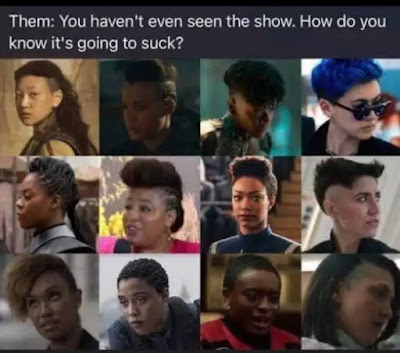
-How do you ruin a layup. Everyone waited in lines for a good Marvel movie and you just put whipped cream on a pile of dog poop. I give you Mandalorian and Grogu
I spent most of my life prior to the Internet. I worked in the tech industry so I was able to get on it earlier than most, but that didn’t change my regular life.
I never had to worry about social media either. You could just not Answer the phone, or call someone back. When you broke up, it was over.
I could get to anywhere I wanted with a piece of paper with instructions on it, and a (dime)/quarter to call a home phone since we didn’t have cell phones. All my friends could get there too, and we all got there on time, and at the same time. 
That means I also write in cursive, and can drive stick. The first car I had was so old I had to learn how to double clutch to downshift.
We learned to read the weather by observing the wind, the sun, the title patterns, and observe nature.
I had to look up stuff in an encyclopedia, or find a book using the card catalogue system to write term papers.
So if they drop EMP, I’ll be just fine. As for Gen X, why, Z, millennials, and the rest of the people after boomers, they’re effed.
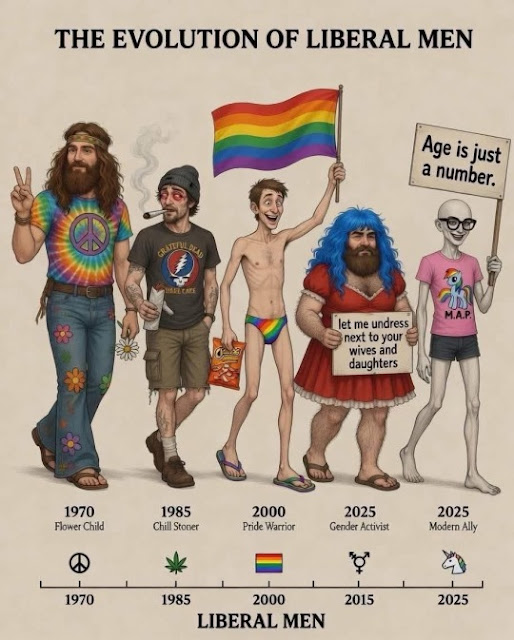
New poll shows that just 16% of men support the Democratic Party… They are a bunch of pansies who don’t know which bathroom or which end of a gun to use. I bet they throw like girls. I know one and I’m not sure he’s not mentally disturbed. I guess my homosexual neighbors are democrats, but they don’t count as men.
A Collapsing Europe Shows Where Democrat Policies Will Take America – we already broke free of them once, and then saved them from themselves twice. That’s enough. It turns out that the flyover country “hicks” are better off than the UK and many other countries there. Why do we want to go back to that?
Europe’s Freeloading Days Are Over: America Demands Reciprocity – Their education, medical and pensions were free, because they weren’t paying a dime in defense. America paid for it in drug costs and everything else. Well, WWII is over, so is NATO and the USA being an ATM for Europe
The post-conversation spiral happens when you leave a social interaction and can’t stop overthinking whether you totally screwed it up.
My brain was doing it again.
I’d had a lovely time getting to know a potential new friend. We had a lot in common. We were both single moms, both about the same age, and both working in mental health careers. She got my references. She seemed to understand my life. And the dinner meetup was, well, fun.
So why was my brain picking apart every little thing I had said and done?
You idiot. I can’t believe you said that.
Why did I share that story? Did I trauma dump?
She said she wanted to hang out again… but she was probably just being polite.
Even though I make my living writing about introversion, social anxiety, and socializing, I had fallen headlong into a common pitfall: the dreaded post-conversation spiral.
What Is the Post-Conversation Spiral?
You might think the social anxiety problem ends when the conversation ends. But for a lot of people, that’s when the second half begins: the mental replay, the shame, the “evidence gathering,” and the imagined judgment.
Psychologists call this post-event rumination or post-event processing. It’s when you replay a social situation in your mind, focusing on what you think you did wrong. Instead of remembering the interaction as a whole, your mind zooms in on a sentence you wish you had phrased differently, a pause that felt too long, or a facial expression you couldn’t quite interpret.
Research has found that the more socially anxious someone is, the more likely they are to ruminate after a social event. In other words, the post-conversation spiral is not just a bad habit or a personal weakness. It’s a real part of the social anxiety cycle.
And unfortunately, it makes anxiety worse.
Why Your Brain Does This
Social anxiety makes you focus on yourself. Instead of simply being present and enjoying another person’s company, part of your attention turns inward.
Then, when you replay the conversation through the lens of fear, you’re not reviewing it neutrally. You’re acting like a detective searching for clues that confirm your anxiety while overlooking the evidence that everything went fine. A small awkward moment starts to feel like proof that the whole interaction went terribly.
This is one reason the spiral feels so convincing. It seems like you’re gathering facts, but really, you’re gathering anxious interpretations.
And even if you would never be diagnosed with an official social anxiety disorder, you may still know the feeling of coming home from an otherwise pleasant interaction and suddenly wondering whether you totally screwed it all up.
Why ‘Just Stop Thinking About It’ Doesn’t Work
If you’ve ever tried to force yourself to stop replaying a conversation, you already know that doesn’t work. Sometimes the harder you try not to think about something, the louder it becomes. You tell yourself, “Stop thinking about that weird thing you said,” and now the weird thing you said is the only thing available for your brain to think about.
A better approach is not to fight the anxious thoughts, but to change how you respond to them.
The goal is not to convince yourself that every conversation went perfectly. That would be unrealistic, and your brain probably wouldn’t believe it anyway. The goal is to become a little more balanced and a little less self-punishing.
How to Stop the Post-Conversation Spiral
Here are six science-backed things that can help:
1. Name what’s happening.
The first step is to recognize the spiral for what it is. You might say to yourself, “This is post-event rumination,” or, “My brain is replaying the conversation because I feel socially anxious right now.”
That creates some distance. Instead of treating every thought as a proven fact, you take a step back and begin to see it as part of an anxiety pattern.
There’s a difference between “She thought I was weird” and “I’m having the thought that she thought I was weird.” The second version does not make the worry completely disappear, but it does give you more room to question it.
2. Pinpoint the specific moment you’re stuck on.
Ask yourself: What moment keeps coming back to me? Once you identify the specific worry, it becomes easier to examine.
“The whole night was terrible” is hard to work with. “I’m worried I talked too much about my divorce” is something you can actually think through.
3. Ask what evidence you actually have.
This is where cognitive restructuring can help. Cognitive restructuring is a technique often used in Cognitive Behavioral Therapy (CBT) that helps you examine whether your thoughts are accurate, exaggerated, or incomplete.
Ask yourself:
What evidence do I have that my worry is true?
What evidence do I have that it might not be true?
Is there another possible explanation?
What would I think if a friend told me they had done the same thing?
For example, maybe your new friend got quiet after you told a personal story about your divorce. Your anxious brain decides, “She was uncomfortable and now she regrets meeting me.”
But there are other possibilities. Maybe she was thinking about what you said. Maybe she related to it. Maybe she was tired. Maybe she didn’t know how to respond in the moment. Maybe the pause felt much longer to you than it did to her.
The point is not to force a positive interpretation. The point is to stop treating the most painful interpretation as the only one.
4. Check your expectations.
If you’re socially anxious, you probably hold yourself to a standard you would never apply to anyone else. You expect yourself to be warm, interesting, funny, appropriate, relaxed, responsive, emotionally available, and perfectly articulate all at once. No awkward pauses, no clumsy wording, and no signs of nervousness.
People say odd things. They interrupt without meaning to. They tell stories that don’t land exactly the way they hoped.
A more realistic standard might sound like:
Did I show up?
Was I kind?
Did I listen?
Did I make an effort to connect?
Did the other person seem comfortable overall?
If the answer is mostly yes, the conversation does not need to be put on trial.
5. Make a plan only if a plan is needed.
Sometimes rumination is trying to point you toward something useful. Maybe you want to send a simple text saying, “I had a nice time tonight.” Maybe you genuinely said something that came out wrong and you want to clarify it. In those cases, take one concrete action.
But notice the difference between action and rumination. Action sounds like, “I’ll text her and say I enjoyed dinner.” Rumination sounds like, “What if she thought I was desperate when I said we should hang out again, and maybe I should wait three days, but what if waiting three days seems cold, and what if she only said yes because she felt sorry for me?”
When there is something to do, do it. When there is nothing to do, the task is learning to sit with the uncertainty without feeding it.
6. Use mindfulness as a way to return to your life.
Mindfulness does not mean you have to become perfectly calm. It can be as simple as noticing the replay and gently returning to what is happening right now.
Imagine the rumination as background noise. It can be there without getting all of your attention. You can be washing dishes and notice, “There’s that thought again.” You can be reading in bed and notice, “My brain is replaying dinner again.”
Then bring your attention back to the dish, the book, the room you’re in, or the next small thing you need to do.
Let the Conversation Be Good Enough
I’m trying to remind myself that maybe I did say something imperfectly at dinner. Maybe there was a moment or two that felt awkward. Maybe I could have asked a better question or not overexplained so much.
But maybe that’s also just what happens when two humans are getting to know each other.
The post-conversation spiral wants us to believe we have to perform perfectly in order for someone to like us. We must never be awkward, never overshare, never be too quiet, and never say the wrong thing.
But real relationships don’t work that way. People usually don’t decide whether they like you based on one sentence or one clumsy moment.
So the next time your brain starts obsessively replaying a conversation, you don’t have to fight it. You also don’t have to believe everything it says. Pause and ask, “Am I reflecting, or am I ruminating?”
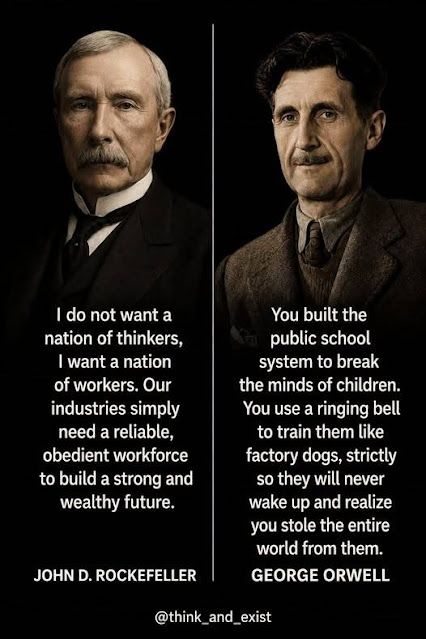
7 Wilson started progressives and socialism in the US. He was also a huge racist. Anything with either Rothschild or Rockefeller attached to it is bad for the country
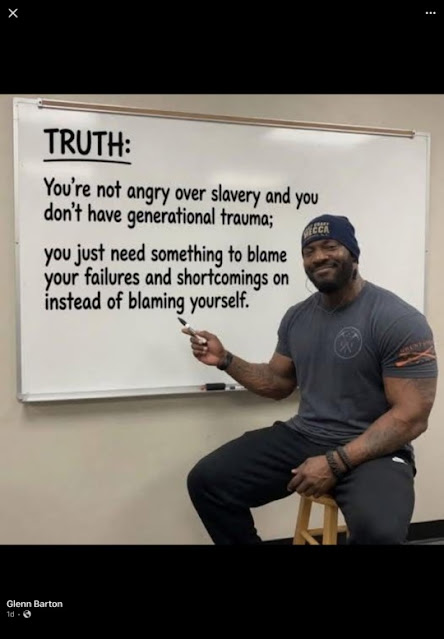
Reparations: Who Pays Whom? – Those who made it to the US have it so much better, they should be thankful. Plus, a surprisingly low number of Americans were slave owners.
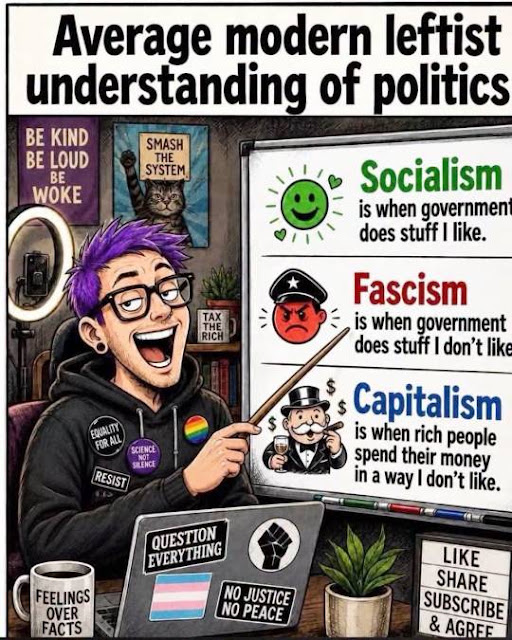
Why Are White Liberal Women Obsessed With an Ideology That Oppresses Women? – The last 2 words in that description tells you everything. That they could be liberal and are women, meaning they think with their feelings and emotions rather than deal with the facts and the hard choices. If they thought through the situation, they’d still be women, but for sure wouldn’t be liberals, cutting off their noses to spite their faces.
Marriage
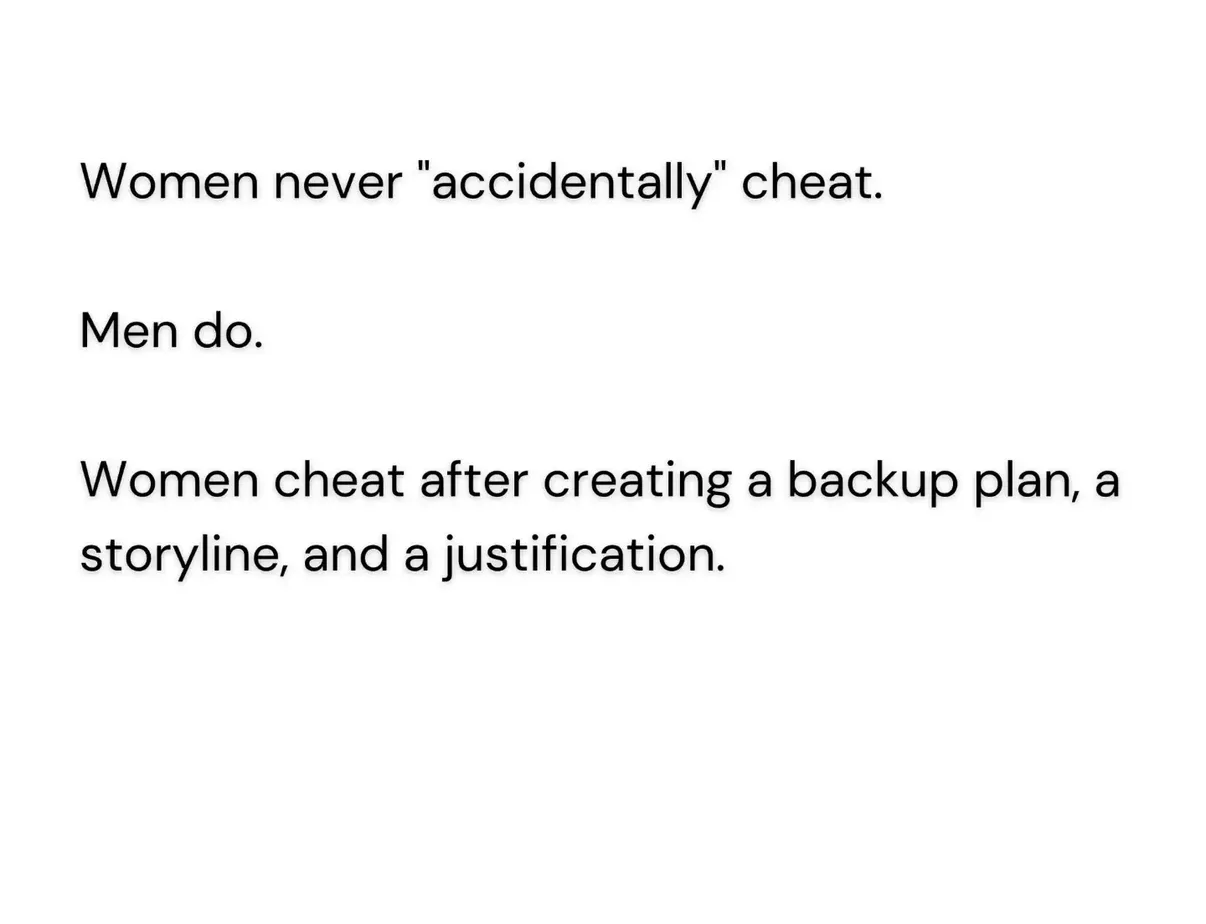
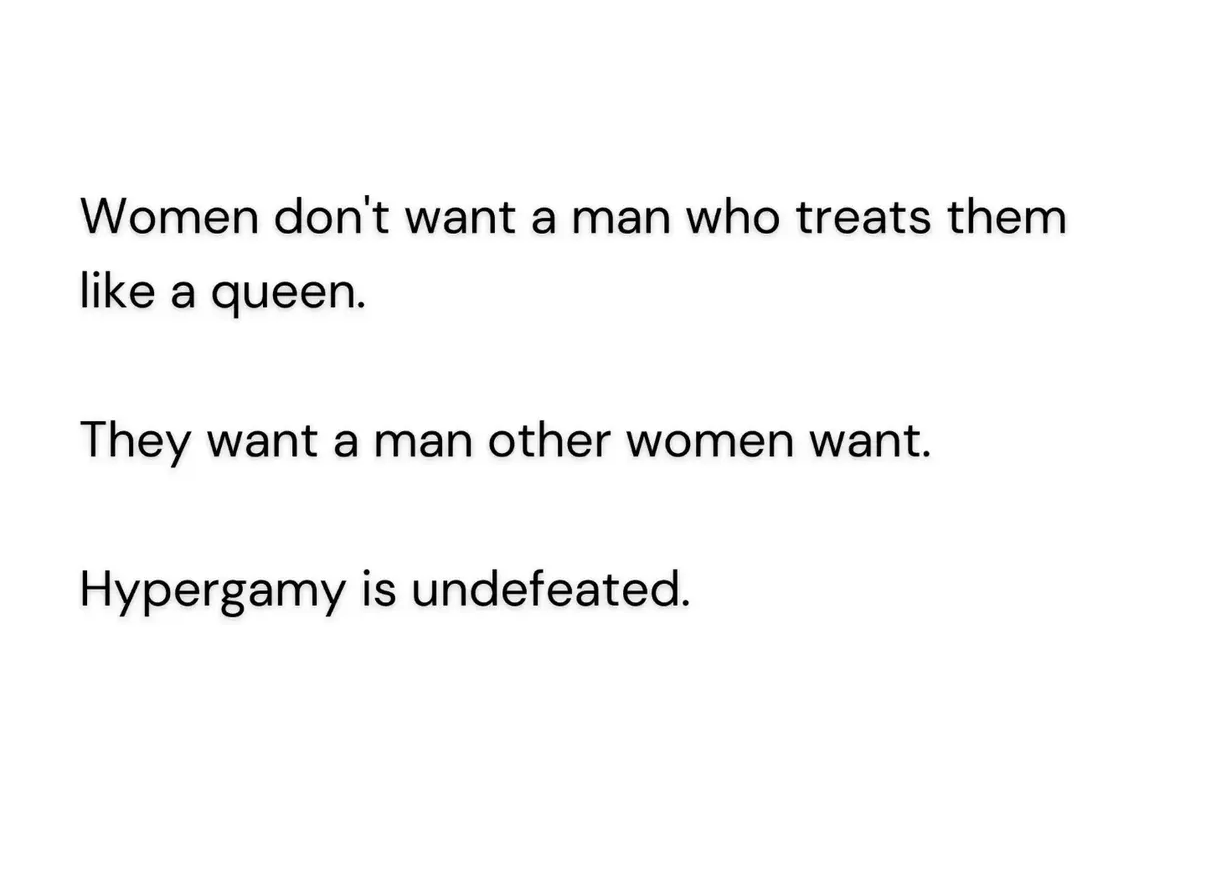
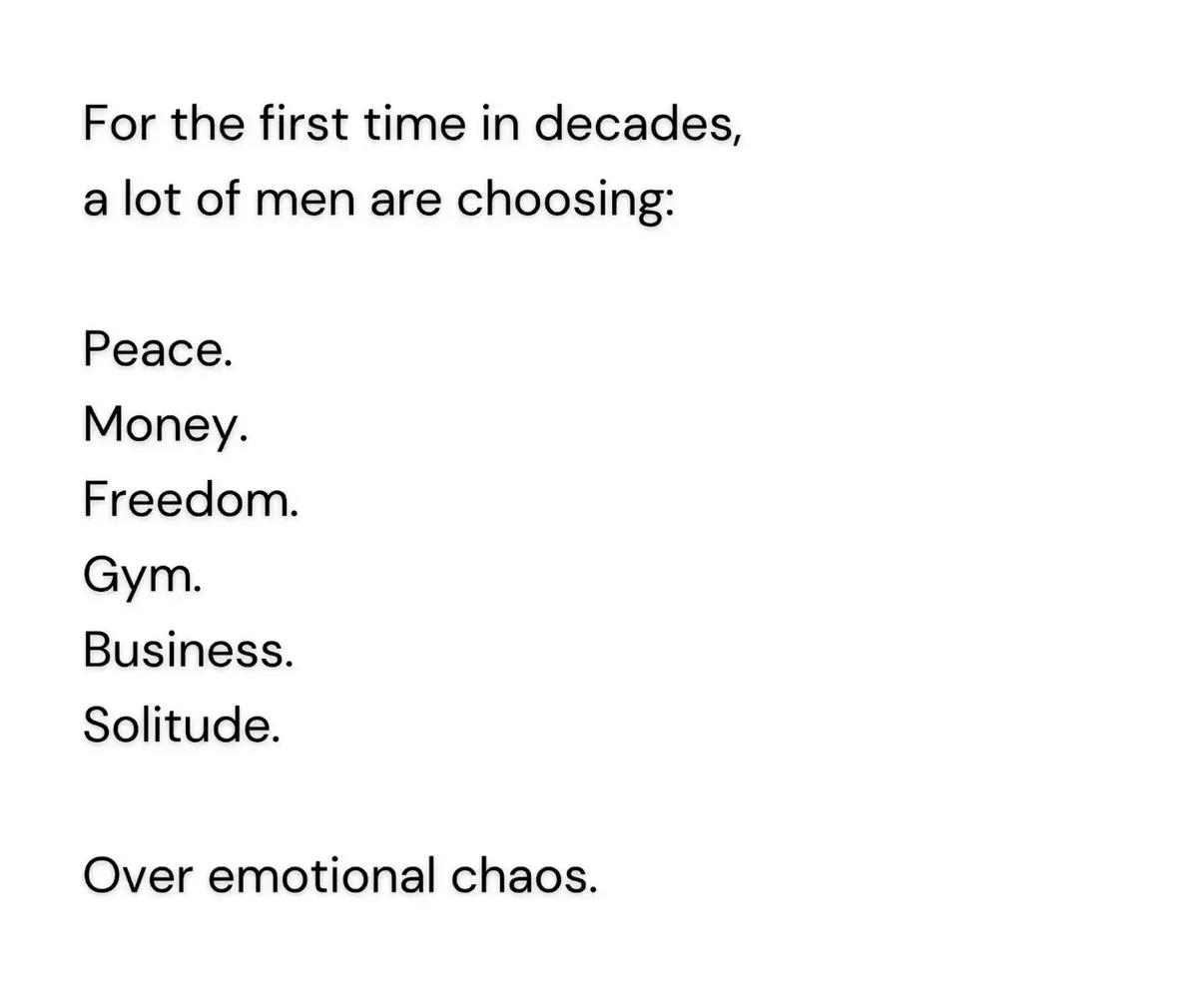
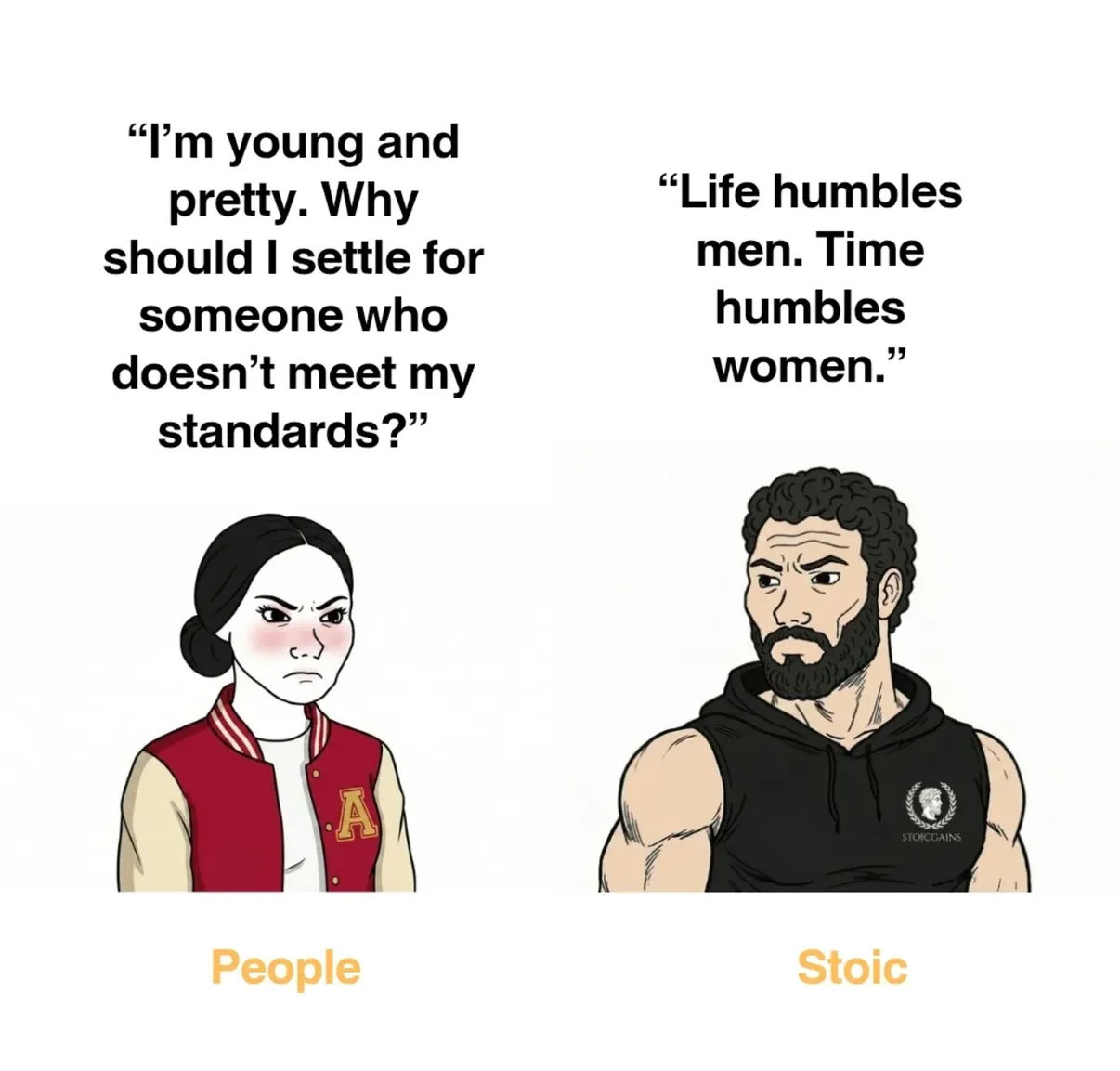
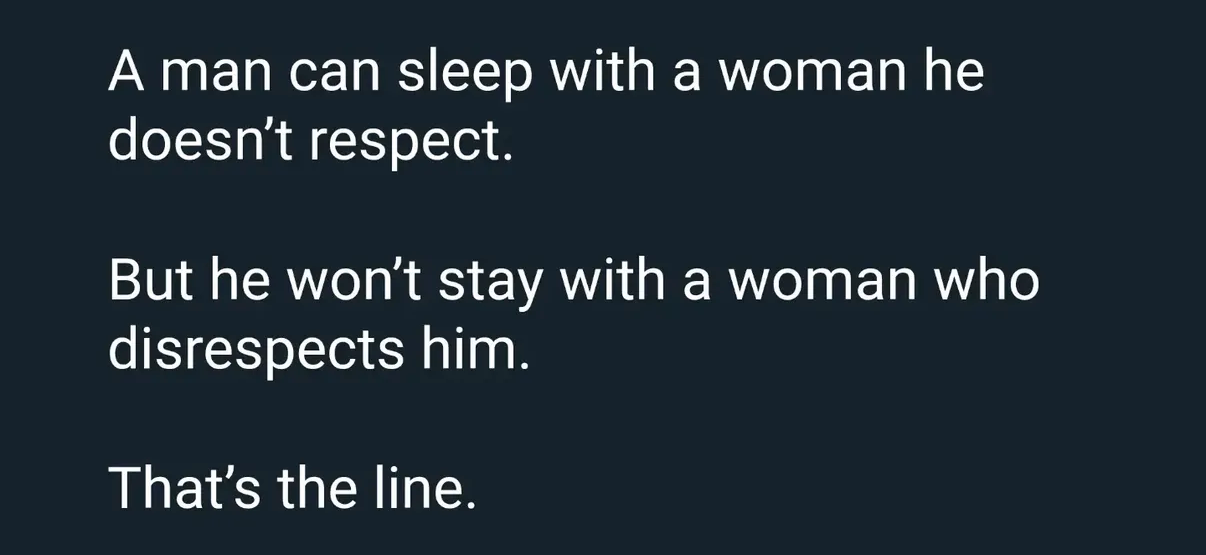
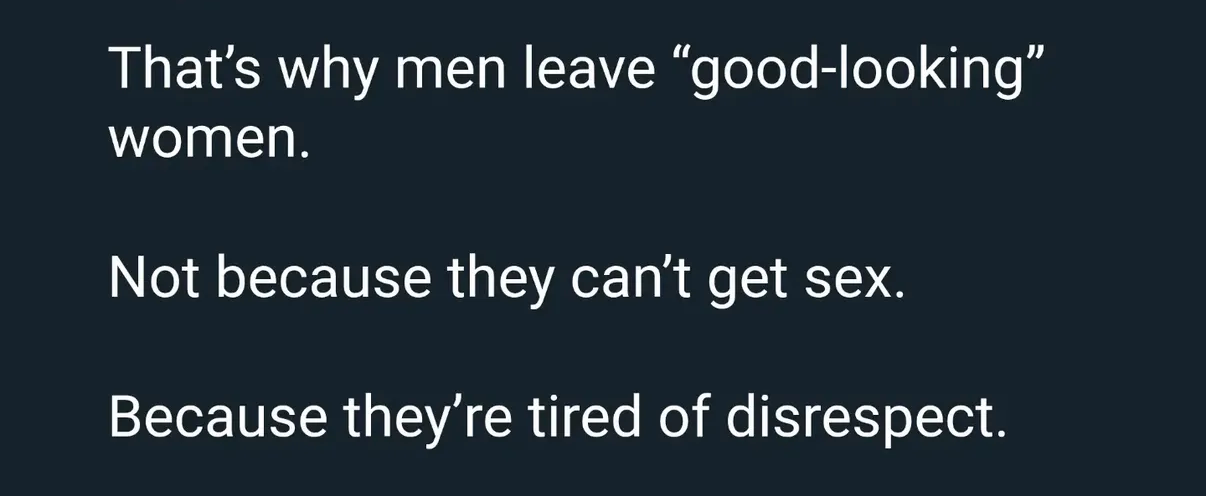
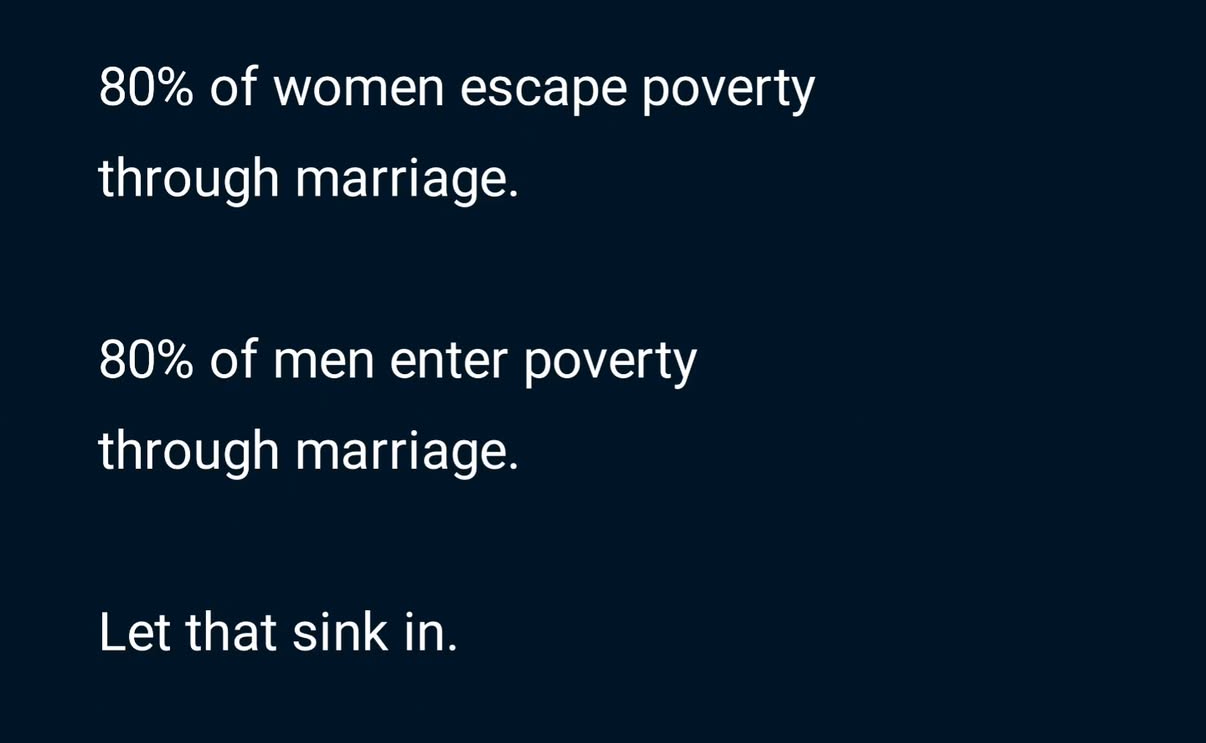
No Wonder Men Are Opting Out – men have simple needs, food, sex, respect and most of all peace. If you read the list of what girls are putting men through, What rational man reads this list and thinks: yes, that’s exactly what’s been missing from my life? Do they stay up at night and think of how to make things worse for men?
I’ll put a portion of the article right below this with a full link if you care to read.
Marvel was great because it was good guys beating the bad guys. It wasn’t a dissertation on how to be woke, queer, tranny or any other thing but a hero.
They got into a situation that seemed unwinnable and create a solution to overcome the evil of the world or universe and win.
It started out with defeating the Nazi’s. Who doesn’t like that story? The real heroes were men who overcame. That is what life is about, not seeing how woke you can be.
The audience were a bunch of geeky white guys in their parents basements believing they could be Ironman or Captain America, not BLM, flaming fags, and for sure they know there is no girl who is going to kick ass on a bad guy. It is fantasy where you imagine you are saving the world, not trying to make it gay. This is just a different them on the Bud Light story
Now, the story:
(ZeroHedge)—The saga of woke comics is the saga of woke America. Much like video games, comics and superhero movies were ignored by conservative movements as “meaningless kids stuff” until recently, which is part of the reason why those industries were so easily invaded by leftists and used to indoctrinate millions of children and teens a decade ago.
Culture is more important than politics. This is obvious. It’s a fact that leftists have understood for generations and one that conservatives have foolishly dismissed. Only in the past few years has there been a shift; at least, the progressive rampage through America’s various media institutions has been stalled and slightly reversed.
But, the most captured platforms are not going to change anytime soon, even in the face of financial decline and mass layoffs.
Disney and Marvel have recently announced a shake-up of the comics division, with over a thousand layoffs this year (after moderate layoffs over the past few years), and new executive leadership. Far-left DEI advocate Dan Buckley is on the way out. This change is being presented as a retirement, though some skeptics argue he is being forced out as part of the company’s restructuring.
Buckley replacement is not much better, however. TV Chief Brad Winderbaum is taking over as Marvel President and his track record on Marvel TV series includes some of the biggest woke failures in streaming history – Ms. Marvel (Muslim Pakistani representation), She-Hulk: Attorney at Law (feminist/meta take, which he defends as a strong performer despite critical failure), Ironheart (feminism and BLM propaganda), Echo, Agatha All Along, Wonder Man (prominent LGBT elements).
Marvel Comics, a subsidiary of Disney, has been at the forefront of far-left propaganda in content for many years, and their woke concepts are usually ported directly into Disney’s movies and streaming series. Everything from gay and trans X-Men to black Spider-Man, to female gender swaps of popular male characters have become the norm. And, books sales have flatlined in response.
I could be very serious here and write a dissertation about the relationship between God, man and the history between the 3. Instead, the child inside of me will do this:
I’m going to have a hard time taking this one seriously, as it is my favorite Mensa joke.
It continues like this: and give 3 examples. Most people take it seriously and try to think their way through it, not realizing that it is a joke on them. I’ve heard some of the lamest responses by people of all levels.
Were I in college, it would be a couple of pairs of extra underwear, a few cases of beer and a few blunts.
Now that my life is half a century later, I’m willing to go to my mountain house. I have my stuff there, I know the place and I don’t have to fly or stay in a germ ridden hotel room that was barely cleaned. I’m getting sicker, so big travel plans are now not in my life
I stayed in an airbnb last year that was a dump. It was completely different from the pictures and description.
So for me, I go to one of my houses and that’s it.
Don’t get me started on Darwin vs Creationism. These guys don’t even know who is alive or extinct. It’s why I have problems with The Origin of the Species being believable
Two marsupial species scientists believed had vanished more than 6,000 years ago have been discovered alive in the remote rainforests of Western New Guinea.
The discovery was detailed in studies published in Records of the Australian Museum, according to a March 6 press release from the museum obtained by PEOPLE. Researchers identified living pygmy long-fingered possums (Dactylonax kambuayai) and the ring-tailed glider (Tous ayamaruensis) in the rainforests on the Vogelkop Peninsula of New Guinea. The animals are now considered Lazarus species, or part of the Lazarus taxon, a group of animals that have been found living after they were thought extinct and previously known only from fossils.
“The discovery of one Lazarus taxon, even if thought to have become extinct recently, is an exceptional discovery,” said lead researcher Professor Tim Flannery, an Australian Museum Distinguished Visiting Fellow. “The discovery of two species, thought to have been extinct for thousands of years, is remarkable.”
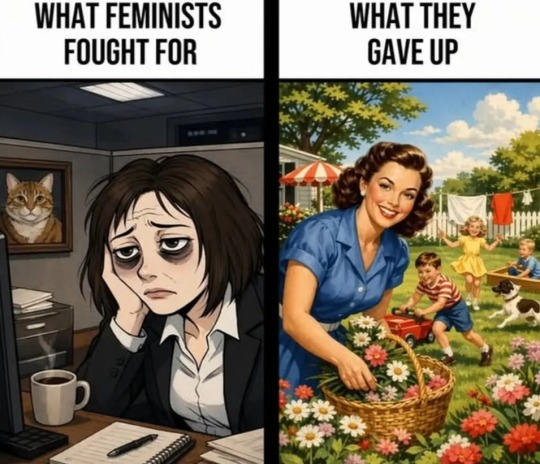
The newly released novel, Yesteryear, by Caro Claire Burke, features a tradwife who gets transported back to the 19th century to live a truly trad life. Deeply humbled by her experience, the tradwife desires to return to the present day, replete with the luxuries afforded to her by the feminists she disdains. Already a New York Times bestseller, the novel is set to be adapted for film by Anne Hathaway.
It takes little imagination to anticipate how the film adaptation will go: Much like the dystopian vision of The Handmaid’s Tale, it will amount to a scolding for those lacking gratitude for feminism. The implicit message is exactly what feminists have always insisted: conservative women who embrace domesticity are either frauds, victims, or too dim to know the difference.
I’ve been writing about feminism for more than a decade. The main opposition is almost always the same: tedious clichés and skimpy narratives. I’m told that I want women to be subjected to vile men with no way to escape or that I don’t think women should work or vote. And then, there is some effort to remind me how I have personally benefited from feminism — usually because of my doctorate, or public voice. These tired arguments, gracing comment boxes, social media, and a wide array of publications, are repetitive, unthinking, self-righteous.
Few realize that these exhausted sound bites were established decades ago to protect feminism from criticism. Media, academia, and vocal influencers pushed these talking points deeply into the culture. They’ve become so entrenched that they’ve scarcely needed adjusting from outside pressure and remain so dominant that Hollywood can bank on them. This novel and soon-to-be-movie will follow the same playbook.
What is not generally grasped is that, despite its self-assured bravado, feminism is actually a fragile ideology. Because it is not based on a solid foundation of truth, it can only survive through power, so it relies on perception, PR, and political force. In the face of decades of its corrosive effects, it can’t draw from scientific studies or even principled arguments to defend itself. All it has is a broad defensive perimeter of clichés and a tidy narrative of protection. Western women and men have been unwittingly supplying it for decades, allowing feminism to expand unchecked.
The effect has been that most people genuinely believe they are protecting something good, buying into the largely fictional narrative that feminism “is just about helping women.” Few realize its connection to the havoc now on display in the culture.
What Is Feminism?
In its simplest form, feminism is the belief in two things: Men are contemptible, and women should be just like them.
This definition isn’t a one-off found in some obscure, unknown feminist. Rather, it can be seen in the work of every major feminist leader for the last 200 years: Mary Wollstonecraft, Elizabeth Cady Stanton, Simone de Beauvoir, Betty Friedan, Kate Millett, and Gloria Steinem. What is their biggest enemy? The patriarchy. And what do they want? To have the power they believe the patriarchy has.
These two ideas — men are contemptible, and women should be just like them — have been cemented together to form the bedrock of western women’s views on sex and marriage, resulting in highly destructive consequences: an ever-widening gap between men and women and steep decline in marriages, women’s battle with their fertility and bodies, increased abortions, the birth dearth, the push for same-sex marriage, surrogacy, gender fluidity and the trans movement, and the rise of anxiety and depression.
Between 5 different doctors appointments, 2 procedures under anesthesia and so many blood draws that they used all my veins on both arms, I gathered these for those who care.
Profiles of Valor: Armed Forces Day – I always thank anyone in uniform or that has a hat from a previous war (especially Viet Nam) for their services. I include the Police, firemen, EMS, ICE, and anyone who thanklessly helps the public, especially liberals who hate them (and don’t know why, other than they were told to)
Honda reported its first annual loss since becoming a publicly listed company in 1957. The $2.7B drop comes months after the Japanese carmaker scaled back its electric vehicle plans in the US. (See the scrapped models.) – no free government handout, no one buys them. Gas price goes up, people buy Hemi’s
(Note: this is an update. Will B. Done pointed out that the links didn’t work, so I fixed them so you can click and enjoy)
I’ve written this blog since August of 2005. It was originally meant for my job in analyst relations, but took a turn when I retired in 2011. It’s morphed into any number of things from humor, sarcasm, anti-Covid Jab and my ramblings on life.
I start Chemotherapy next week, so it’s going to slow down considerably, although I’ll post from time to time. I’ve scheduled some posts so it will look like I’m continuing as I suffer through the poison they will be putting in me. You’ll read something every day this week, but I’m not collecting headlines. I hope to be back, I just know I won’t have any energy
I want to say that I’ve enjoyed the 10’s of thousands of comments, and different groups of readers.
I mostly wrote it as it is my favorite form of communication. If you read anything about me, you know I’m introverted so small talk isn’t my greatest strength.
I pulled the list of top posts. It’s funny to me that my most successful post is Euphemisms for Stupid, which was number one on Google for over 10 years in that category.
As I look at the list, I see various stages of my life and different careers. I see family, pets and co-workers. I’m especially proud of My Dad. It’s the post, On Behalf of the President of the United States.
I wish you all the best and a longer life than me.
It’s not over, but for sure will not be as consistent.
If anyone wants to guest post, send it to me simonize@protonmail.com and I’ll try to put it up and give you credit.
It wouldn’t be my first choice to promote cancer awareness, but it’s quite a feat nevertheless.
ALERT: Man gets lit on fire as he pulls a police car with his pen-s in an attempt to raise awareness for prostate cancer.
John Stephenson, 50, is a strong man who, using a rope attached to his genitals, became the first person to pull a car, a 2-ton French police vehicle, with… pic.twitter.com/XgWEHFNopg
Are there more important stories we could be covering? Sure, I guess. Iran is still a thing. Trump is going to China. Democrats are being all a noun and a verb and a “raaaaaacism” over redistricting. Plus, generally speaking, when we here at the Louder with Crowder Dot Com website write about testicles, it involves a dude whipping them out in the girls’ bathroom and Democrats supporting them doing so. It’s nice to have someone put their balls to good use for a change.
John Stephenson, a 50-year-old kickboxer, shattered a glass ceiling, becoming the first bloke to pull a two-ton car with nothing but his dong WHILE set on fire. Technically, he didn’t use his entire one-eyed trouser snake, piece of pork, wife’s best friend, his Percy or his cock (he’s British, so I’m biting off of the Monty Python song). He just used his nuts. He also set himself on fire too. Why? Good question.
I’ve pulled a car with my testicles before and I’ve pulled a car on fire – so I thought why not combine the both, but this time do it with my penis.
Rest assured, everything is still intact! Stephen says that while “it did hurt quite a bit,” but he likes to set challenges and this was something no one has done before. He did the research.
Look, I played Handel’s Messiah over 200 times. I know classical music, I’ve played everything from Rhapsody in Blue, Fugue in G minor, Beethoven, Tchaikovsky, Mozart and you name it. I’ve played them all
I also heard Charlie Daniels trying out The Devil Went Down To Georgia 6 months before He released it to see if the crowd would like it
Still, I enjoyed Robert Plant playing old Zeppelin tunes and Brad Paisley playing his greatest hits as much as anything. Rock N Roll, Trampled Under Foot, So Much Cooler Online, I’m Gonna Miss her were as much fun to listen to as anything.
Everyone likes their own style of music. I’m interested in what you guys like also.